
Years ago, I attended a Tenement Museum tour that focused on an Irish family who settled in New York City in the mid 1800s. The guide showed an image by the satirical artist Thomas Nast (1840-1902), who was hailed as the father of political cartoons and worked for Harper’s Weekly, a popular 19th century periodical, reaching more than 300,000 people.
Most of the museum guests gasped. The image was of an Irish woman, working in a kitchen. She was depicted as an ape.
One Black guest observed: “The Irish were allowed to evolve.”
His unsaid words reverberated: And Black people were not.
This truth has been made all the more clear with recent racist posts from our nation’s leadership, which included a meme of apes depicting our former first family Barack and Michelle Obama.
At the Stowe Center we are keenly aware that stereotypes perpetuate harm by dehumanizing entire peoples and denying individuals their dignity as unique beings. This is harm that affects people physically, mentally, and generationally. This harm can work to erode progress—and yet we see millions of people excelling despite this hateful tactic.
Still, the derisive laughter and superior feeling that accompanies the creation of a “cartoon” such as Nast’s, or the contemporary example, or the derisive laughter for some that might be its reception, is sickening to consider.
Although Harriet Beecher Stowe’s intent in Uncle Tom’s Cabin was to humanize Black people for her predominantly white readership, she was herself trapped by stereotypical views. Stowe created Tom as a Christ-like martyr, sacrificing himself to save two enslaved women hiding nearby. However, his characterization as an obedient enslaved person was just the fuel white supremacists needed to grab hold and convert the character to a weaponized meme, in the media of the time. Minstrelsy captured and grossly exaggerated Tom’s obsequiousness with staged, melodramatic renditions that were wildly popular and overshadowed the noble, principled character Stowe intended.
Because we are dedicated to the legacy of Stowe and all who advocate hope and dignity then and now, we also tell the story of those who influenced Stowe—Josiah Henson, Frederick Douglass, Harriet Jacobs, and Sojourner Truth among other lesser known names such as Drusilla and Rachel Crook, Black children indentured to care for the Beecher children. We tell these stories because today’s children and adults benefit from understanding history as a complex, nuanced interweaving of many different lives asserting their beliefs about life, liberty, and happiness.
We acknowledge the stereotypes perpetuated by Stowe’s story, and we contrast them with the human beings who were not fiction but instead real people, fully alive with the nuanced and complicated beauty of human beings. We actively demonstrate that truth, fortified by multiple primary sources, is a far more exciting, community-building, and beneficial story than a single person’s point of view—especially if that point of view is knowingly or not racist.
Stowe did not intend racism, but we recognize intent in the current “memes.”
Take for instance, the recent digitally altered photograph of the arrest of civil rights activist Nekima Levy Armstrong posted by the White House. Although Armstrong was calm and dignified as she was literally shackled by law enforcement, the fake image posted by the White House shows her weeping, slump shouldered.
“They couldn’t break me. And so they altered an image showing me broken,” Amstrong said. “I thought, am I that much of a threat to the world’s greatest superpower?” (As It Happens, Nil Köksal, CBC)
The official response was: “Enforcement of the law will continue. The memes will continue.” (Canadian Broadcasting Association)
Armstrong’s observation points to fear as a motivator for the altered photo. After the executive order titled “Restoring Truth and Sanity to American History,” was made public in September 2025, Chandra Manning, a history professor at Georgetown University, considered that the executive order is rooted in “the unfounded fear that Americans cannot handle the full story of our nation’s past.”
In an interview also responding to this order and the concern about teaching slavery in schools, Social Justice activism and Stowe Prize winner Bryan Stevenson said. “I think when we are honest about history, we learn things, we discover things and we prepare for things differently.”
He continues on this line of learning by asserting:
“I’m talking about slavery, liberation and segregation because I want to liberate us from the burden that that history creates — that burden that still hangs over us, the fog that that history has created that no one is trying to address.
“We know that we can’t go through life and care about someone and love someone and get strong and healthy if we’re unwilling to acknowledge when we make mistakes, to repent for those, to apologize for those. And collectively, we have not done that in the United States.”
This interview with New York Times reporter Jeffry Toobin is titled “What Germany Did That America Still Hasn’t.” And what Germany did was actively work to come to terms with its history.
We see clearly that our national leadership is actively pursuing erasure of our history; it is hiding the truth behind lies that are intended to flex muscles of American exceptionalism and white supremacy.
There are many, many mistakes in our history; there are also many, many acts of reconciliation and atonement, with the hope of a better future through trying again only for the better.
As James Baldwin (1924-1987) said in The Fire Next Time (1963): “I imagine one of the reasons people cling to their hates so stubbornly is because they sense, once hate is gone, they will be forced to deal with pain.”
Our shared American history IS painful. It is also filled with stories of hope and triumphant resilience. There are many, many mistakes in our history; there are also many, many acts of reconciliation and atonement, with the hope of a better future through trying again only for the better.
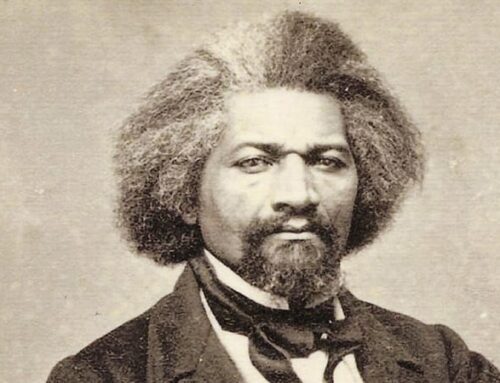
At the Stowe Center we offer a tour called “Inheriting Freedom,” which introduces young people to the history of enslavement by sharing the story of Frederick Douglass, Stowe’s model for the character of George in Uncle Tom’s Cabin. We start by asking the students about freedom, then shift into defining slavery. This is a heavy topic, so we pause for an emotional check in. A few weeks ago, one Black fifth grader shared that he felt very sad. We acknowledged his feelings and continued the tour in which everyone learned about how Douglass learned to read, self-emancipated, and worked to help free all Black people. By the time the boy we spoke to earlier left, he was pumping his hands in the air, smiling, and yelling “Black people can do ANYTHING!”
As a nation we continue to create history with acts of bravery, feats of kindness and accomplishment despite all odds, and respectful acknowledgement of our shared humanity. We must recognize and refuse the regressive nature of leaning into stereotypes to assert power. We must speak out against the hatred these tactics generate. We need to name it for what it is: Racism. And we must seek American leadership that prioritizes humanity, dignity, and the rights to life, liberty, and happiness for ALL PEOPLE.