
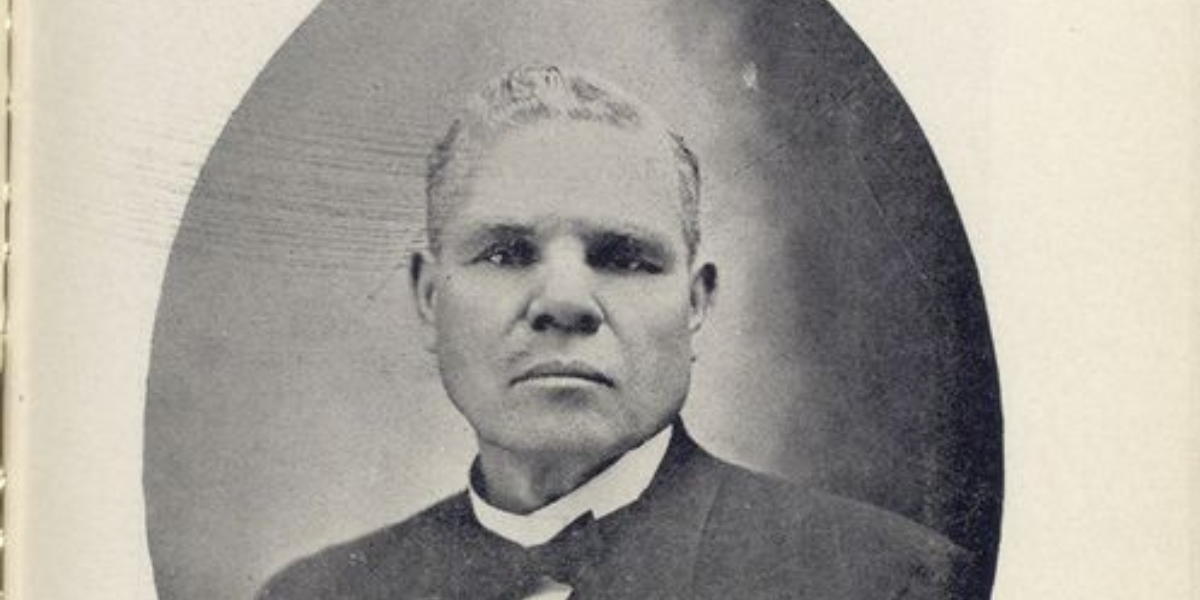
In late 2024, the Stowe Center made the acquaintance, so to speak, of the remarkable Dr. William H. Phillips through our archive. While looking for something completely different, I came across a hand-written narrative detailing Dr. Phillips’ life, who was born enslaved in Virginia in 1841, resisted brutal oppression, gained his liberty, and became a nationally respected Baptist preacher. (check out the previous blog post for our “introduction” of Dr. Phillips)
Since then, I’ve had the privilege to learn more about Dr. Phillips, speak with incredible scholars, and start to trace the many connections to his life. One of the most exciting parts of this research is learning about his daughter, Sarah Willie Layton.
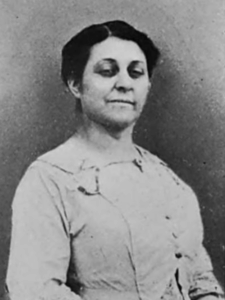
Sarah Willie Layton, circa 1915, from Golden Jubilee of the General Association of Colored Baptists in Kentucky, ed. Rev. C.H. Parrish, 1915
We know that Dr. Phillips was an advocate and community builder throughout his life. While still enslaved, he fostered deep friendships, served as a news outlet for the enslaved community, and organized people to fight slavery (literally, it was a covert militia group). Once liberated, Dr. Phillips immediately found his voice as a community leader, going on to become an influential Baptist minister, being awarded an honorary Doctorate of Divinity, and being courted by churches across the country. Eventually landing in Philadelphia, Phillips was known as an advocate for his Black community.
The activist impulse was passed on to his daughter, Sarah Willie Layton. Born in Mississippi in 1864, Layton (then Phillips) graduated from LeMoyne College in Memphis, Tennesse in 1881. She married I. H. Layton in 1882 and the couple moved to Los Angeles, California. Layton’s advocacy work began in earnest in California, especially around rights for Black women and women’s suffrage. She was one of the founders of the California Federation of Colored Women’s Clubs and the California editor for The Woman’s Era, the first national newspaper published by and for Black women.
Following the death of her husband in the 1890s, Layton and her daughter, Madaline, moved to Philadelphia with her parents, where she continued her advocacy work.

Detail of the 1900 federal census showing the Phillips household in Philadelphia
Like her father, Layton was involved in the Baptist church and put together a women’s organization branch, despite strong resistance from many male church leaders. Layton leveraged her standing in the church to advocate for women’s suffrage, anti-lynching legislation, and racial justice.
Layton also founded, with others, the National League for the Protection of Colored Women (NLPCW). Organized in 1905, the NLPCW assisted Black women coming to Philadelphia from the South, and the organization quickly grew to have chapters across the nation. The organization offered housing, a small sum of money, and job training while taking to task “unscrupulous men” from supposed employment agencies who would take advantage of the newly arrived women. Oh yeah, and during this time, she took graduate classes at Temple University.
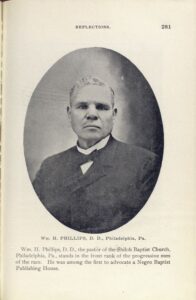
William H. Phillips, D.D. Philadelphia, PA, 1901, from the Schomburg Center for Research in Black Culture, New York Public Library

Sarah Willie Layton circa 1908, from the Philadelphia Colored Directory, 1908
Clearly, Sarah W. Layton took after her father, Dr. Phillips, and he spoke of her with pride and love. I find myself wondering about their relationship and this transferring of values. How much of Phillips’s ministering did he bring home? Did he directly engage his family with these values, or did Layton learn more by his example? Did they agree on the more progressive efforts, or was Phillips more aligned with the Baptist church in regards to women’s suffrage, for example? What was their home in Philadelphia like? I can’t help but imagine a home buzzing with activity and debate; a place where community leaders, advocates, and thinkers gathered. But of course this is just supposition on my part. Perhaps the Phillips home was a place of rest and refuge from the world’s problems and they kept the home separate from the “business” of changing the world.
As usually happens, the more I learn and look into a topic, I now I have so many more questions; about the experiences of a man who saw a nation transformed, about Dr. Phillips’s life in Philadelphia (contemporary to W.E.B. Du Bois’s time in the city), and about the ever-widening circle of Dr. William H. Phillips, a circle that included religious leaders, abolitionists, and now, women’s suffragists.

From the collection of the Stowe Center for Literary Activism, Hartford, CT.
. 

The Phillips Manuscript Project is funded in part by CT Humanities.