
We are eager to share an interactive, conversational tour that deeply considers history and today.
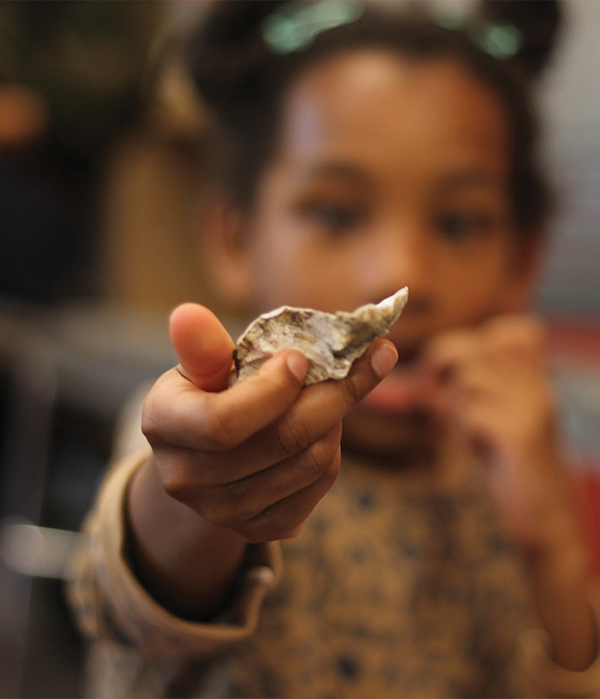
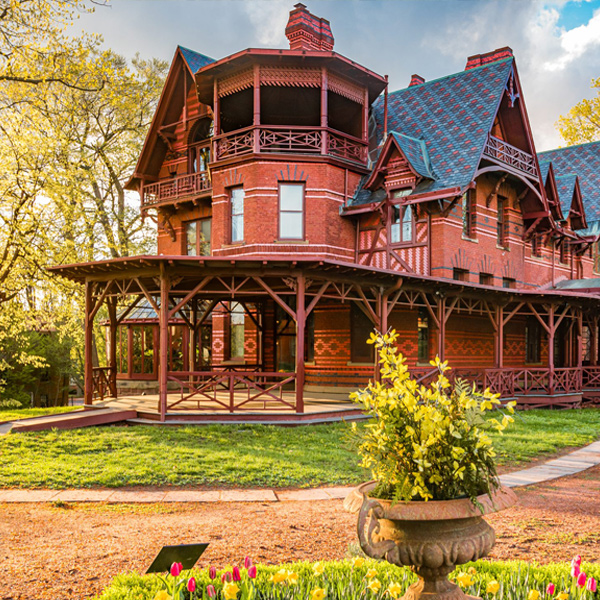
At the Stowe Center, we encourage students to see themselves in history and as change-makers in our own historic moment. Tour Stowe’s Hartford home, a National Historic Landmark, and participate in extended learning programs where ideas turn into inspiration and positive change.
- All school programs support Common Core Learning Standards and the Connecticut Social Studies Framework.
- Guided tours and programs are open to K-12 students. Available year round by advance reservation; reservations must be made 30 days in advance of proposed visit date. A ratio of 1 adult: 10 youth is required.
- School groups are for 10 students or more. Minimum of 10 people. (Maximum per day is 40.)
- Stowe House tours are available year-round with four (4) weeks of advance reservation.
- Please note, student groups that are between 27 and 40 total visitors can only be accommodated during our Thursday morning timeslot.
- Inheriting Freedom is the tour required for all Hartford Public School 4th and 5th graders. Please select this option at checkout.
Here are just a few things to keep in mind for your upcoming visit:
General Information
- Large backpacks, gum, food, and beverages are not permitted in the Stowe House. We provide bins to store bags and lunches. Your group is welcome to picnic on the grounds or inside of the neighboring Katherine Seymore Day House depending on weather.
- Allow time for shopping at the New Dawn Bookshop, a satellite of our community partner and local independent bookstore, River Bend Bookshop.
Weather/Delays/Arrival
- In the event that the Stowe Center or your school is closed due to inclement weather, we will make every effort to re-schedule your group.
- If you will arrive more than 15 minutes early or late, please notify us at 860.522.9258 x317.
- We can accommodate vans and individual cars in our parking lot at 77 Forest Street. Buses can drop off students at the curb in front of the Stowe House and then park on Forest Street.
- Tours require two chaperones for every 10 students (3rd grade through 8th grade); one chaperone for every 10 students 9th grade and up.
- Teachers/Chaperones are responsible for the group at all times.
- Because the Stowe Center is comprised of 19th century landscape and buildings, some ADA adjustments require advance arrangements for the best experience for your youth. Please indicate if we can provide accommodations and services in advance by calling 860.522.9258 x317, or send an email to tickets@stowecenter.org.
If you have any further questions about your visit, please email or call yyoung@stowecenter.org or call 860.522.9258 x319.
Payment is due at the time of booking. A minimum of two weeks’ notice is required for any reservation changes or cancellations in order to receive a refund or adjustment to your reservation.
The Stowe Center for Literary Activism offers flat-rate pricing for school group visits. Rates are based on group size and school type:
Title I School Groups
- Up to 13 visitors: $104
- Up to 26 visitors: $208
- Up to 40 visitors: $320 (Available on Thursdays only)
School Groups
- Up to 13 visitors: $195
- Up to 26 visitors: $390
- Up to 40 visitors: $600 (Available on Thursdays only)
Please note: Colleges, universities, and other higher education institutions are classified as Adult Groups and are subject to adult group pricing.
Group pricing applies to all students, educators, and chaperones included in the reservation. Groups of up to 40 visitors can be accommodated on Thursdays only. Please contact us with any questions regarding group size, curriculum connections, accessibility needs, or special accommodations.
The Civics Education through Museum Enrichment (CEME) grant helps make hands-on civics and history programs more affordable for K–12 students. Funded by the U.S. Department of Education, CEME supports field trips and classroom programs at participating museums, including the Stowe Center for Literary Activism.
Need financial assistance? Title I schools and schools in Priority Districts qualify for free CEME programming, while other schools receive reduced pricing. Limited transportation assistance is also available, with eligible schools able to request bus reimbursement when booking.
If your school needs financial aid to participate, simply use code CEME2627 at checkout.
Stowe Center staff may join the tour and photograph students. These images help us document our impact for funders and grant applications and share our work with new audiences.
Photography is permitted under Connecticut law without prior guardian authorization. However, we will fully respect any request not to be photographed. Teachers should identify participating individuals who wish to opt out.
TOUR OFFERINGS
One tour, two stories! Enter Harriet Beecher Stowe’s 1870’s historic home for our 1-hour conversational tour about the Black abolitionist Frederick Douglass and the white anti-slavery author Harriet Beecher Stowe.
We’ll explore their stories from the time they were young children until they became famous authors, paying special attention to the importance of love, family, and education in their lives. Did you know that Frederick Douglass taught himself to read and write in secret as a child? Or that Douglass was aided in his extraordinary escape to freedom by his wife-to-be, Anna Murray? Did you know that Harriet Beecher Stowe’s famous work of anti-slavery fiction, Uncle Tom’s Cabin, was directly inspired by Frederick Douglass and other Black activists of the 19th century?
Our interactive, conversation-based tour is designed to explore some of the hardest moments in U.S. history in an empowering, age-appropriate way. Step back in time with us, touch and hold historical objects and documents that help this history come alive, and join in a conversation about how all of us have the power to create change.
[Designed to be enjoyed by visitors ages 6 and above.]
Enter Harriet Beecher Stowe’s 1870’s historic home for a 1-hour conversational tour about the power of words to change the world.
We’ll explore the life and writing of Harriet Beecher Stowe, best known for authoring Uncle Tom’s Cabin (1852), a complex and controversial anti-slavery novel that had a massive impact on American history and culture. What made Stowe, a white woman from Connecticut, decide to write an anti-slavery novel? We’ll learn about Harriet’s childhood, her adult years in Cincinnati, Ohio, and the sources she drew on to write and defend Uncle Tom’s Cabin, a work that went to be the best-selling novel of the entire 19th century.
We’ll also use Stowe’s life as a jumping off point to tell a larger story about the U.S. abolitionist movement, exploring the influence of Black activists, storytellers, and enslavement survivors on Stowe’s views and anti-slavery writing. We’ll pay particular attention to the life and work of Josiah Henson, the 19th-century Black abolitionist who became the major source of inspiration for the titular character of Tom.
Tour Overview
Enter Harriet Beecher Stowe’s 1870’s historic home, where we’ll make space for powerful stories from history.
What is a Freedom Narrative? Historically referred to as a “slave narrative,” a freedom narrative is a true, firsthand account of liberation by a Black storyteller, describing their efforts to free themselves from slavery and to build a life in freedom. Thousands of freedom narratives were written, dictated, and shared before and after slavery legally ended in the United States. Their creators used the power of their words to speak out against injustice, assert their humanity, and record the truth of our nation’s history.
On this tour, we’ll learn about three 19th-century Black abolitionists: Harriet Jacobs, Frederick Douglass, and Josiah Henson. Each of these authors had a direct connection to and impact on the writing of Harriet Beecher Stowe, but this tour focuses on their lives and activism. We’ll have the opportunity to hear portion of their stories, told in their own words, and to consider the lessons these stories hold for our own time.
SCHOOL PROGRAMS
Our Zine Program encourages students to use writing and art as tools for self-expression and advocacy, giving them the opportunity to share their voices while developing critical thinking and creative communication skills.
How do we know what we know about the past? How does looking deeply at a historical object also lead us to ask critical questions about the object? What is an archive, even?
Unpacking the Archive leads students through a deep exploration of a single archival document, encouraging questions both about what information the object offers and what information it leaves out. An exercise in careful observation and critical thinking, Unpacking the Archive sharpens students’ skills at simultaneously examining and questioning the proof on which historical knowledge is based.
Start by selecting your preferred tour date and time below. Tour experiences can be selected during checkout.
Tour Groups
November 13 @ 12:30 pm - 2:30 pm
Tour Groups
November 18 @ 9:30 am - 11:30 am
Tour Groups
November 18 @ 12:30 pm - 2:30 pm
Tour Groups
November 20 @ 9:30 am - 11:30 am
Tour Groups
November 20 @ 12:30 pm - 2:30 pm
Tour Groups
December 2 @ 12:30 pm - 2:30 pm