When the Sons of Liberty marched through the streets of Charleston in October 1765 shouting “Liberty!” they were followed by enslaved people—who also chanted “Liberty!”
On July 5, 1852, the abolitionist Frederick Douglass gave a stinging speech on American patriotism in the midst of slavery, declaring “What to the Slave is the Fourth of July?” Douglass used his speech that July 5th in Rochester, NY, some two years after the passage of the Fugitive Slave Act, to lambast the United States for what he saw as profound hypocrisy–a nation that declared itself a bastion of freedom while allowing the institution of slavery. It was a paradox to which the Black experience in America was inherently tied.
People of African descent had been part of the English colonies since the 1600s, arriving in Jamestown a year before the Pilgrims arrived at Plymouth. As English slavery was not codified early on, some enslaved people shared a similar status with indentured servants. This changed, as new laws were created to firmly establish a system of race-based slavery. When the American Revolution erupted, Black people, both free and enslaved, sought to find where they fit into this conflict over liberty.
Black people were involved in the Revolution from the beginning. As discontent grew in port cities like Boston and New York, Black sailors and enslaved people working in harbors were at the scenes of many flashpoints. One of those was Crispus Attucks, a fugitive slave born to an African father and a Natwick Nantucket Indian mother. Attucks, along with what John Adams would derisively refer to as “a motley rabble of saucy boys, negroes and mullatoes, Irish teagues and outlandish jack tars,” confronted a British guard at the local customs house of Boston—the climax to ongoing labor tensions between sailors and soldiers, mingling with revolutionary rhetoric. In the ensuing melee British soldiers fired on the crowd, killing five, including Attucks who John Adams in court singled out as their ringleader. Patriot activists like John Adams, Paul Revere, and others with the Sons of Liberty labeled the confrontation a massacre. Adams’s depiction of Attucks as a mob leader played on popular racial sentiments of the day and deserves scrutiny. But whatever his actual role, Attucks became engrained within the national narrative—as a martyr in the Boston Massacre.
Attucks was not alone. Throughout the colonies, enslaved people added their voices to the growing debate. When the Sons of Liberty marched through the streets of Charleston in October 1765 shouting “Liberty!” they were followed by enslaved people—who also chanted “Liberty!” likely with greater meaning. Anxious South Carolina authorities moved quickly to shut down such rhetoric, fearful of the contagion of liberty. But Black people were not deterred. As revolutionary pamphlets circulated throughout the colonies, enslaved people wrote petitions arguing for their freedom. In June 1774, enslaved men in Massachusetts wrote a petition on behalf of those “held in a state of slavery, within the bowels of a free Country,” asserting their “naturel [sic] right to be free.” Months later, the Providence Gazette and Country Journal reprinted a petition by a Bristol Lambee on behalf of those “poor Africans … brought to this distant land to be enslaved.” Drawing on revolutionary language, the petition declared that “liberty, being founded on the law of nature,” was “as necessary to the happiness of an African as to the happiness of an Englishman.” In 1779, enslaved persons in Fairfield County sent a similar petition to the Connecticut Assembly, denouncing the “dreadful Evil” of slavery and appealing directly to Patriots “nobly contending, in the Cause of Liberty.” Most petitions went ignored or were rejected. But they kept coming, joining a barrage of similar petitions throughout New England.
Others spoke to the moment through literature. Lemuel Haynes was born in 1753 in West Hartford, Connecticut, the son of an African man and a white woman. Though his parentage meant he was free, he spent his childhood as an indentured servant. In 1774, free from his indenture, Haynes joined up with the Continental Army. Impacted by revolutionary rhetoric and themes of divinity, in 1776 he penned a religious and political work titled Liberty Further Extended: Our Free thoughts on the Illegality of Slave-Keeping. Haynes used Calvinist themes to speak on the spiritual immorality of slavery. He also drew on the Declaration of Independence, quoting that “all men are created equal.” But Haynes went further, denouncing slaveholding Patriots and criticizing the Declaration for its silence on slavery and racial prejudice.
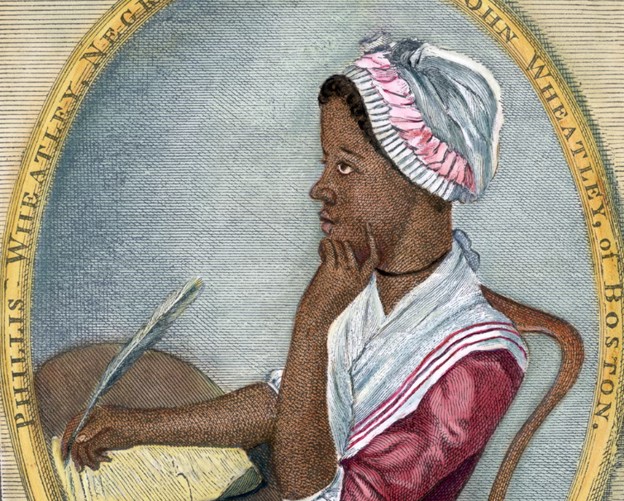
One of the most famous Black writers of the day was the poet Philis Wheatley, who arrived in Boston harbor on a slave ship in 1761 at the age of seven. She was renamed for the ship, Philis, that transported her and educated by her liberal-minded owners. By the age of fourteen, she was publishing poetry in local papers. Throughout the tumultuous 1770s some of her poems touched on politics, including an homage to the Boston Massacre, where she wrote of “How Caldwell, Attucks, Gray, and Mav’rick fell.” In a poem to the British governor of colonial Massachusetts in 1772, Wheatley referred to her own personal understandings of liberty from the voice of the enslaved: “Should you, my lord, while you peruse my song, Wonder from whence my love of Freedom sprung.” Wheatley asserted that through their sufferings, enslaved people understood the cause of liberty better than most. In a 1778 poem, she directly asked how the Patriots could call on “Divine acceptance” while they “hold in bondage Afric’s blameless race.” Wheatley urged colonists to see that freedom from British tyranny had to include “generous freedom” for all.
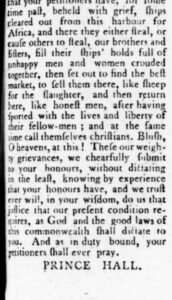
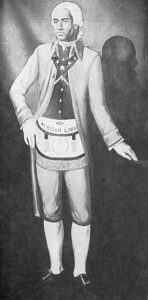 When war broke out numerous Black people joined the Continental Army. Free Black men like Cuff Smith of Connecticut, whose father Venture Smith had purchased his freedom, enlisted. So did Cesar and Festus Prince, who left their Vermont home to join the Continental Army in Massachusetts. The founder of African American freemasonry, Prince Hall, is listed in military records, and may be one of the 120 persons of color who fought at Bunker Hill. Among these was Salem Poor, a former slave from Massachusetts who had purchased his own freedom and gained fame for mortally wounding the British Major John Pitcairn during the fighting. Free Black people had many reasons to join the Patriots. Some believed in the cause. Others came out to protect their homes and communities. Many also hoped their service would inspire the new nation to live up to its ideals. Enslaved people also joined the Continental army. This was not always voluntary. Some slaveowners manumitted an enslaved person and enlisted them for military service, as a substitute for themselves. One Hessian soldier remarked on the sight of these enslaved men serving with the Patriots: “The Negro can take the field instead of his master, and therefore no regiment is to be seen in which there are not Negroes in abundance.”
Black people figured most prominently, however, in the Continental Navy, where dire need meant sailors were not as rigidly restricted by race. Free and enslaved Black men were sought after for their prior experiences on merchant and military vessels. Taking on tasks such as pilots, laborers, and more, many earned a reputation for their invaluable skills. James Forten, born into a free Black Philadelphia family, enlisted as a powder boy on the colonial privateer Royal Louis at the age of 14. Captured by the British, he was later released in a prisoner exchange and would go on to be a prominent businessman, activist, and abolitionist in Philadelphia’s postwar free Black community. Altogether, it is believed some 5,000 Black Patriots served in the armies and navies of the Continental forces.
One person who was skeptical about Black enlistment was George Washington, who feared the army would become a haven for fugitive slaves. In November of 1775, he issued an order barring the enlistment of any Black persons, free or enslaved. But he would rescind that order just two months later, opening his ranks to Black soldiers. Because as Washington would learn, the Continental Army was not the only option for Black people in the war.
As Patriot rhetoric grew louder, the British made veiled threats of “arming slaves” against the colonies. These threats became reality when in November 1775 the Royal Governor of Virginia, Lord Dunmore, under siege by an encroaching colonial militia—spurred by rumors the governor was indeed arming the slaves and disarming the white populace—issued a proclamation granting freedom to “all indented Servants, Negroes, or others” who were “willing to bear Arms” for the Crown. Well before the proclamation, enslaved people in Virginia had met to discuss what they might do if conflict erupted. When the call finally came, many came to the governor’s aid, securing his escape. Dunmore called these soldiers his Ethiopian Regiment, who reportedly wore sashes emblazoned with the words “Liberty to Slaves”—a bold rebuttal to Patriots, from men who had seized freedom for themselves. As news of Dunmore’s Proclamation spread, slavery in the colonies was thrown into tumult.
Figures are hard to verify, but anywhere from 20,000 to 80,000 enslaved people took advantage of the proclamation, many heading directly to British forces. One observer in South Carolina, estimated that the colony lost some 20,000 slaves on its own. Thomas Jefferson estimated that Virginia lost 30,000 in just one year. George Washington was dismayed to find out even some of his own enslaved people fled his Mount Vernon plantation. One of these, Harry, went on to serve with British Loyalists against the army of his former owner.
One of the most well-known of these Black soldiers was Colonel Tye, an escaped slave from New Jersey, known initially as Titus, who joined the British as a guerrilla fighter. In 1778 at the Battle of Monmouth, Tye captured a captain of the American militia, earning a reputation and name among the British. His band, comprised of enslaved people and lower-class white loyalists, carried out daring raids throughout New Jersey, attacking Patriot outposts, plantations, and other colonists, carrying off ammunition, silver, cattle, and enslaved people eager to find freedom. As news of Tye’s feats reached an excited slave community, the Patriot governor of New Jersey invoked martial law—hoping to stem the tide. Tye’s end came in the Autumn of 1780 after a minor wound in a skirmish turned fatal.
The threat of enslaved people joining the British was something the Patriots couldn’t ignore. “Hell itself could not have vomited anything more black than this design of emancipating our slaves,” one Philadelphian related. Thomas Jefferson in the Declaration included among the charges against the English king, “He has excited domestic insurrections amongst us,” perhaps in reference to these events. Washington himself on December 26, 1775, wrote ominously of the situation to a fellow planter: “If that Man [Dunmore] is not crushed before Spring, he will become the most dangerous man in America. His strength will increase like a snowball rolling down hill. Success will depend on which side can arm the Negroes the faster.”
Four days later on December 30, Washington rescinded his previous order barring Black enlistment. Against the protests of Southern colonies, he urged Congress to pass a law allowing free Black men already serving in the Continental forces to remain, fearing if they were dismissed, they might “seek employ” among the British. As the Patriot army dwindled under the hardships in coming years, and the British pressed new strategies to recruit enslaved people, if these restrictions were dropped further. In Rhode Island, colonists went beyond Washington’s decree, passing a law in February 1778 allowing “every able-bodied negro, mulatto, or Indian man slave,” to enlist, initially promising each freedom. By the late 1780s, by necessity, strategy, and circumstance, the Continental Army had become an integrated one.
At 250 years, the Revolution remains part of our national paradox that Frederick Douglass spoke to in his famous speech, where figures such as Colonel Tye are as much a part of our past as Crispus Attucks and Philis Wheatley. For Black people, both enslaved and free, the Revolution offered hope, a means to voice their thoughts on liberty, and, for some, a chance to seek freedom by whatever means possible.
—
 Dr. Dexter Gabriel earned his B.A. in history from Texas State University-San Marcos, an M.A. in history also from Texas State University-San Marcos, and his Ph.D. in history from Stony Brook University-New York. His research interests include the histories of slavery, resistance, and freedom in the Black Atlantic, as well as interdisciplinary approaches to slavery within popular culture and media. He teaches courses on the UCONN campus ranging from African American History to 1865, Comparative Slavery in the Americas, and Slavery in Film—to name a few. His most recent published book, Jubilee’s Experiment: The British West Indies and American Abolitionism, explores British Emancipation in the Anglo-Caribbean and its impact on abolitionist strategies in the nineteenth-century United States.