Phillis Wheatley and Prince Hall were among the most influential Black pamphleteers of the 18th century. You may be familiar with some of Wheatley’s work, particularly her poem On Being Brought from Africa to America, one of her most widely studied pieces.
Though brief, the poem is powerful. Wheatley reflects on her forced journey from Africa into bondage in America while addressing themes of race, Christianity, and salvation. At a time when racist beliefs were widespread, she challenged her readers to recognize that Black people were equally capable of spiritual grace, intellect, and redemption.
Prince Hall, while not a poet, was an equally important writer, speaker, abolitionist, and community leader. In his 1797 speech, Charge Delivered to the African Lodge, he condemned slavery and racial injustice. Hall compared the suffering of enslaved Africans to that of the biblical Israelites and exposed the contradiction of a nation demanding liberty while denying freedom to Black people.
Together, Wheatley and Hall represent a tradition of Black writers using words as weapons against injustice.
That tradition is also reflected in the story of Belinda, an African woman kidnapped from her homeland near the Volta River at the age of eleven. She spent sixty years in bondage before finally obtaining her freedom.
Her enslaver, a Loyalist during the American Revolution, fled to Nova Scotia when the war ended. Before leaving, he arranged for Belinda’s freedom. Yet freedom did not guarantee justice. Belinda petitioned the Massachusetts legislature for compensation for decades of unpaid labor.
Denied an education during slavery, she relied on others to help record her words. Today, her petition remains one of the earliest and most powerful arguments for reparations in American history. Through her words, we hear not only a demand for compensation but a demand for recognition of stolen labor, stolen time, and stolen humanity.
This brings us to a question that still echoes through American history: “What to the American Slave Is the Fourth of July?”
Frederick Douglass asked this question in 1852, and more than 170 years later it continues to challenge us.
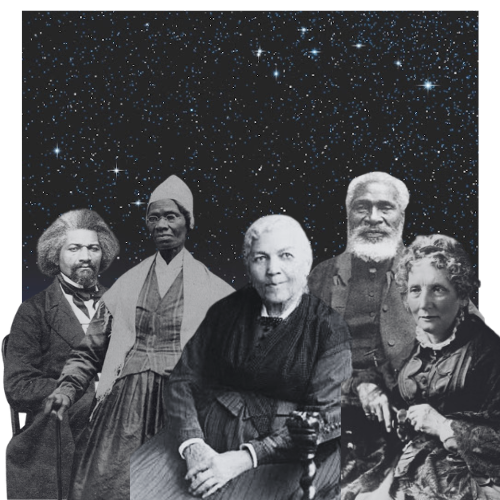
Douglass delivered this speech during a turbulent period. Just two years earlier, the Fugitive Slave Act had strengthened the power of enslavers to hunt down freedom seekers and punish those who helped them. At the same time, Harriet Beecher Stowe’s Uncle Tom’s Cabin was helping awaken many Americans to the realities of slavery.
Douglass became one of the nation’s greatest orators, but his success was not achieved alone. Behind him stood Anna Murray Douglass.
Born free in Maryland, Anna worked as a domestic laborer and used her earnings to help Frederick escape slavery. She provided the clothing, resources, and financial support necessary for his journey to freedom. After their marriage, she continued her activism by sheltering freedom seekers and supporting the abolitionist movement.
Although she could neither read nor write, Anna Murray Douglass helped make freedom possible for countless others. Her story reminds us that not every activist stands at a podium. Some change history through quiet acts of courage and sacrifice.
Another voice that challenged the institution of slavery was Harriet Jacobs.
In her autobiography, Incidents in the Life of a Slave Girl, Jacobs described the unique horrors enslaved women faced. Subjected to years of sexual harassment and threats against her children, she resisted by hiding in a cramped attic crawl space above her grandmother’s home.
For seven years she remained there.
Imagine that. Seven years in a space so small she could not stand upright.
Eventually she escaped to the North, reunited with her children, and gained her freedom. Through her writing, Jacobs ensured that future generations would understand slavery not as an abstract institution but as a deeply personal assault on human dignity.
The fight for freedom also found a powerful voice in Isabella Baumfree, better known as Sojourner Truth.
Born into slavery in 1797, she escaped with her infant daughter and later became the first Black woman known to successfully challenge a white man in court and recover her son from slavery.
As a speaker, abolitionist, and advocate for women’s rights, Truth became famous for her speech at the Women’s Rights Convention in Akron, Ohio. There she challenged both racism and sexism by repeatedly asking a question that still resonates today: “Ain’t I a Woman?”
With those words, she demanded recognition of Black women’s humanity, strength, and Equality.
Finally, we come to Josiah Henson.
Born into slavery in 1789, Henson escaped to Upper Canada, where he established a settlement and school for other freedom seekers. His autobiography became one of the most important firsthand accounts of slavery and is widely believed to have influenced Harriet Beecher Stowe’s portrayal of the character Uncle Tom.
Although Uncle Tom is the hero of the novel, over time the character has been misunderstood and labeled a sellout within the Black community. He was a man who maintained his humanity under brutal conditions. The true warning in the novel is not about Uncle Tom but about the dangers of surrendering one’s conscience and humanity to systems of oppression. The original character was not a coward or a traitor. The true example of submission in the novel is Sambo, a character whose colonized mindset led him to serve only the interests of the enslaver, even to his own detriment. Today that colonized mindset still exists in various forms. This is why examining the stories of pamphleteers and truth-tellers throughout history — and even in our own time —is so important.
These stories matter because they remind us that pamphleteers, writers, and speakers have always played a critical role in shaping history.
They preserved the voices of people whom society tried to silence.
And perhaps most importantly, they left future generations a roadmap—not only for surviving oppression, but for overcoming it.
When we read the words of Phillis Wheatley, Prince Hall, Belinda, Frederick Douglass, Anna Murray Douglass, Harriet Jacobs, Sojourner Truth, and Josiah Henson, we are not simply studying history.
We are listening to people who refused to let others tell their story for them. Their words continue to challenge us, educate us, and inspire us to greatness!
—
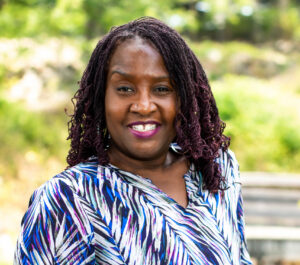 Tammy Denease is a Connecticut-based artist, storyteller, playwright, and educator renowned for bringing “hidden” African American women from history to life through performance, workshops, and public programs. She is the Executive Artistic Director of Hidden Women.