
Contact: Mariangie Pena, Stowe Center for Literary Activism
Phone: 860.522.9258 Ext. 321
Email: MPena@StoweCenter.org
As America Celebrates 250 Years of Independence, One Hartford Exhibit Examines Who Was Left Out
A new Stowe Center exhibition uses comic art and historical storytelling to honor the Black Americans who fought to make the promises of 1776 real.
HARTFORD, Conn. –Across the country, communities are preparing to celebrate the 250th anniversary of the Declaration of Independence with fireworks, parades, and tributes to the nation’s founding.
At the Stowe Center for Literary Activism, the anniversary is prompting a different conversation.
What did independence mean for the millions of Black Americans who remained enslaved long after the Declaration was signed?
That question sits at the center of 6,000+ Declarations of Independence, a new exhibition featuring original comic art by Connecticut artist Joe Young. Opening as part of the Stowe Center’s America 250 programming, the exhibition explores the lives and writings of Black abolitionists who challenged a nation founded on ideals of liberty while denying freedom to millions.
The partnership with Young grew naturally out of the Stowe Center’s commitment to using art and storytelling to spark civic dialogue. Best known for creating Kemet Comics, which celebrates African and African American history through graphic storytelling, Young has spent years making history accessible to audiences who may not see themselves reflected in traditional narratives. The exhibition also coincides with the release of the new Kemet – Declarations of Independence comic book, which expands on the exhibition’s themes through graphic storytelling.
The accompanying Kemet – Declarations of Independence comic book was created from Joe Young’s original concept and artwork, with final illustrations by Davide Gentile and colors and lettering by Mirco Maiorano.
“This exhibition felt like a natural partnership because Joe has dedicated so much of his career to telling stories that have too often been overlooked,” said Erika Slocumb, Director of Interpretation at the Stowe Center for Literary Activism. “His work through Kemet Comics demonstrates how visual storytelling can make history engaging without sacrificing its complexity. That is exactly what we strive to do at the Stowe Center. We help people connect with the past in ways that inspire meaningful conversations about the present.”
“For a lot of people, July Fourth is about one declaration,” Young said. “But there were thousands of people who made their own declarations of independence. Their voices are just as important.”
Through large-scale comic art and historical storytelling, the exhibition highlights figures including Frederick Douglass, Harriet Jacobs, Sojourner Truth, and Josiah Henson. Together, their stories reveal how Black Americans used writing, speeches, memoirs, and activism to claim freedom, dignity, and humanity in a society that often denied them all three.
The exhibition arrives as organizations nationwide wrestle with how to commemorate America’s 250th birthday. While many events focus on the nation’s founders and revolutionary history, the Stowe Center is centering people who were excluded from the freedoms celebrated in 1776.
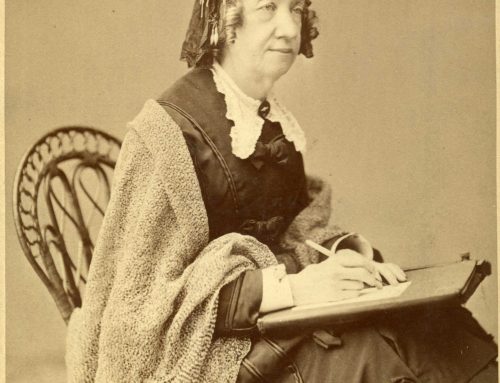
For the Stowe Center, that broader perspective reflects its mission to explore Harriet Beecher Stowe’s legacy while amplifying the voices of people whose words have challenged injustice across generations.
“Harriet Beecher Stowe believed stories could move people from empathy to action,” said Karen Fisk, Executive Director of the Stowe Center for Literary Activism. “As we commemorate America’s 250th anniversary, we have an opportunity to tell a fuller American story, one that recognizes not only our founding ideals, but also the people who fought to make those ideals real. This exhibition reminds us that Black writers, artists, and abolitionists were not on the margins of American history. They wrote it.”
“When the Declaration was signed, millions of people were still enslaved,” Young said. “Their labor helped build this country. Their ideas helped shape it. Their fight for freedom is part of the American story.”
The project reflects the Stowe Center’s focus on literary activism, the belief that words can inspire social change. Located in the former home of Harriet Beecher Stowe, the organization continues the author’s legacy of using storytelling to confront injustice. After publishing Uncle Tom’s Cabin, Stowe responded to critics with A Key to Uncle Tom’s Cabin, a companion volume documenting the real people, testimonies, and historical evidence that inspired her novel. More than 170 years later, 6,000+ Declarations of Independence carries that tradition forward by using art, history, and storytelling to illuminate voices that have too often been overlooked.
For Young, comic art offers a particularly powerful way to engage audiences with difficult histories.
“Comic art saved my life,” he said. “When I struggled in school, comics helped me learn history, civics, science, and current events.”
He hopes the exhibition will help visitors, especially young people and families, connect with historical figures they may know only as names in textbooks.
“This exhibit is kind of a Trojan horse,” Young said. “People come in because of the artwork, but they’re learning about literary activism and the power of words.”
That message feels especially timely as debates over how American history is taught continue across the country.
“In a time where Black history is being erased, it’s important to show the contributions of Black folks and how they helped shape this country,” Young said.
The exhibition’s official opening will take place July 4 from 11 a.m. to 4 p.m. at the Stowe Center for Literary Activism in Hartford. Visitors will have the opportunity to meet Young, participate in a comic book workshop, explore the exhibition, and purchase the newly released Kemet – Declarations of Independence comic book. The opening day programming encourages reflection on freedom, citizenship, and the unfinished work of democracy. The exhibition will remain on view through December.
For Young, that broader conversation is what America 250 should be about.
“We know the story of independence,” he said. “What we sometimes forget is all the people who kept pushing America to live up to what it said on paper.”
Two hundred and fifty years after the Declaration of Independence, 6,000+ Declarations of Independence argues that the nation’s history is larger than a single document or a single moment.
It is also the story of generations of Americans who insisted that the promises written in 1776 should apply to them as well.
The Stowe Center encourages social justice and literary activism by exploring the legacy of Harriet Beecher Stowe and all who advocate hope and freedom—then and now. We envision a world in which engagement leads to empathy, empowerment, and change for good.
###
For more information or to schedule an interview, please contact Mariangie Pena, Director of Marketing, at MPena@StoweCenter.org or (860) 522-9258 ext. 321.