
History grows here.
Surrounding the historic homes of Nook Farm, the Stowe Center’s nearly three-acre campus offers gardens, remarkable trees, outdoor sculpture, shaded pathways, and places to gather and reflect.
The grounds are free and open to the public daily from dawn to dusk.
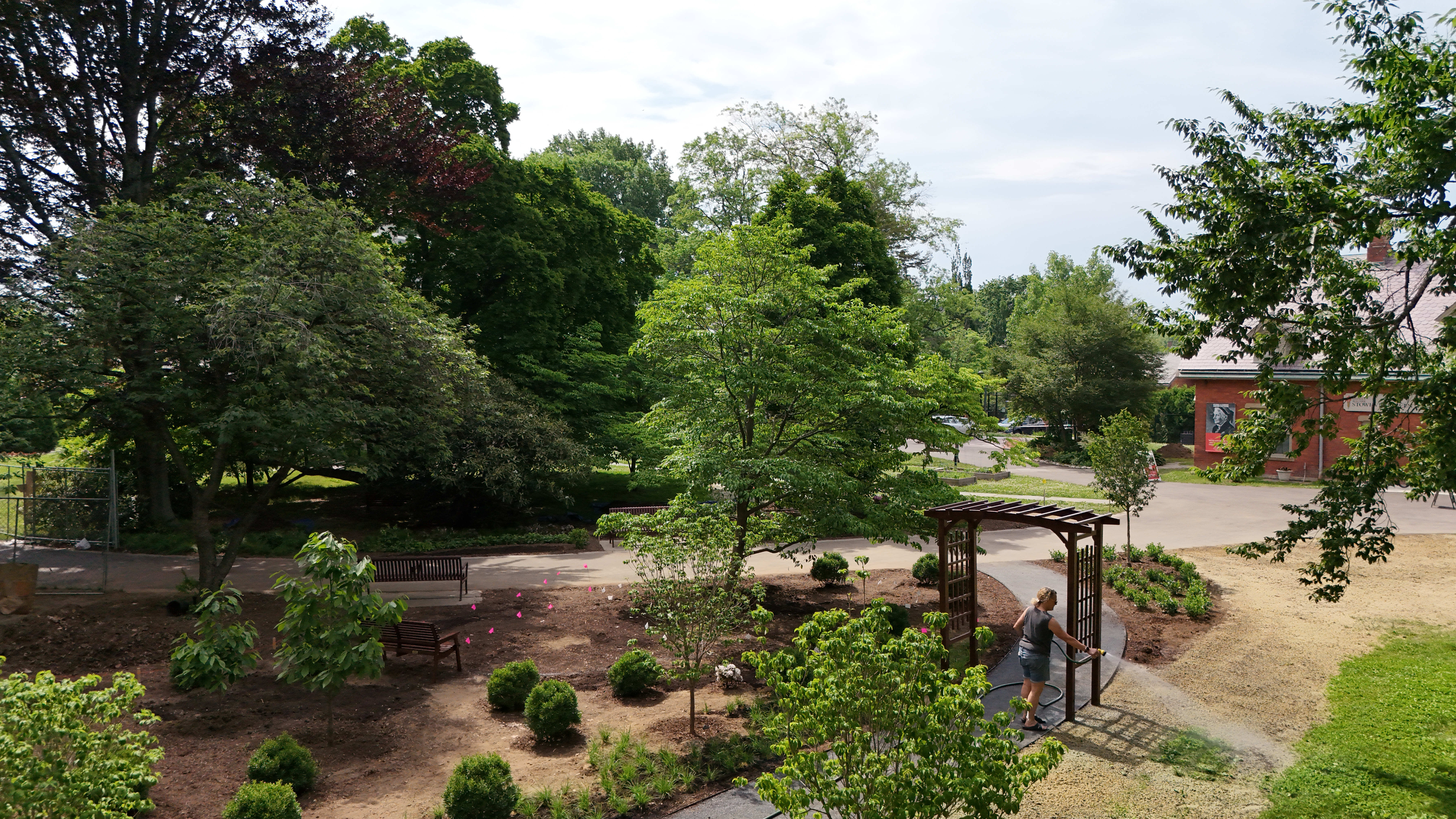
At the heart of the campus, just behind Harriet Beecher Stowe’s home, a new shade garden surrounds one of the landscape’s most remarkable trees: Connecticut’s largest Star Magnolia.
Designed by Claudia Dinep of Outside Landscape in West Hartford, the garden extends across the drive and into the lawn between the Stowe and Twain houses.
The garden includes new dogwood and cornelian cherry trees; inkberry, chokeberry, rhododendron, mountain laurel, and hydrangea shrubs; grasses and ferns; and perennials including coral bells, Solomon’s seal, foam flower, wild geranium, columbine, amsonia, and penstemon. Most of the new plants are native to New England.
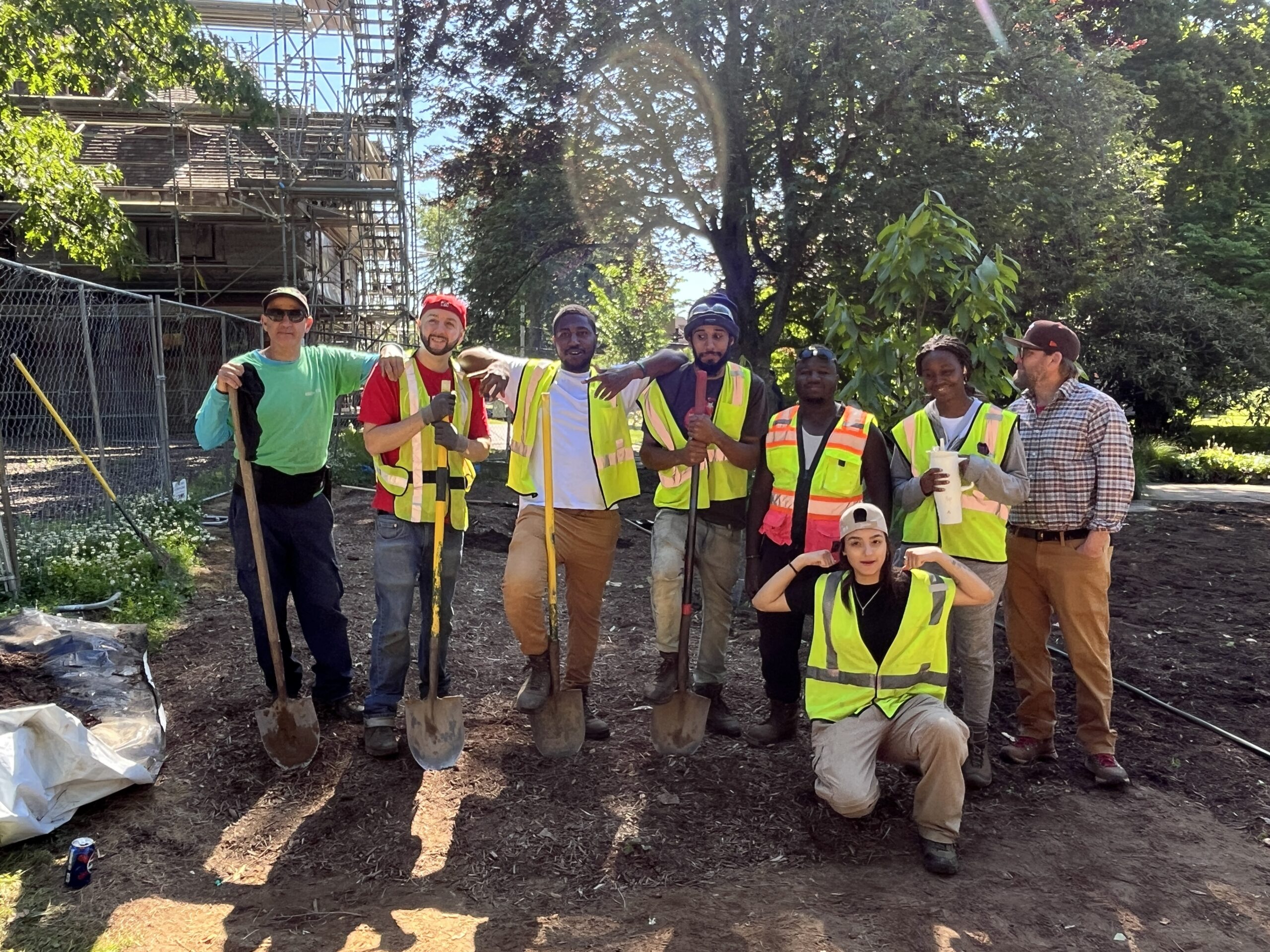
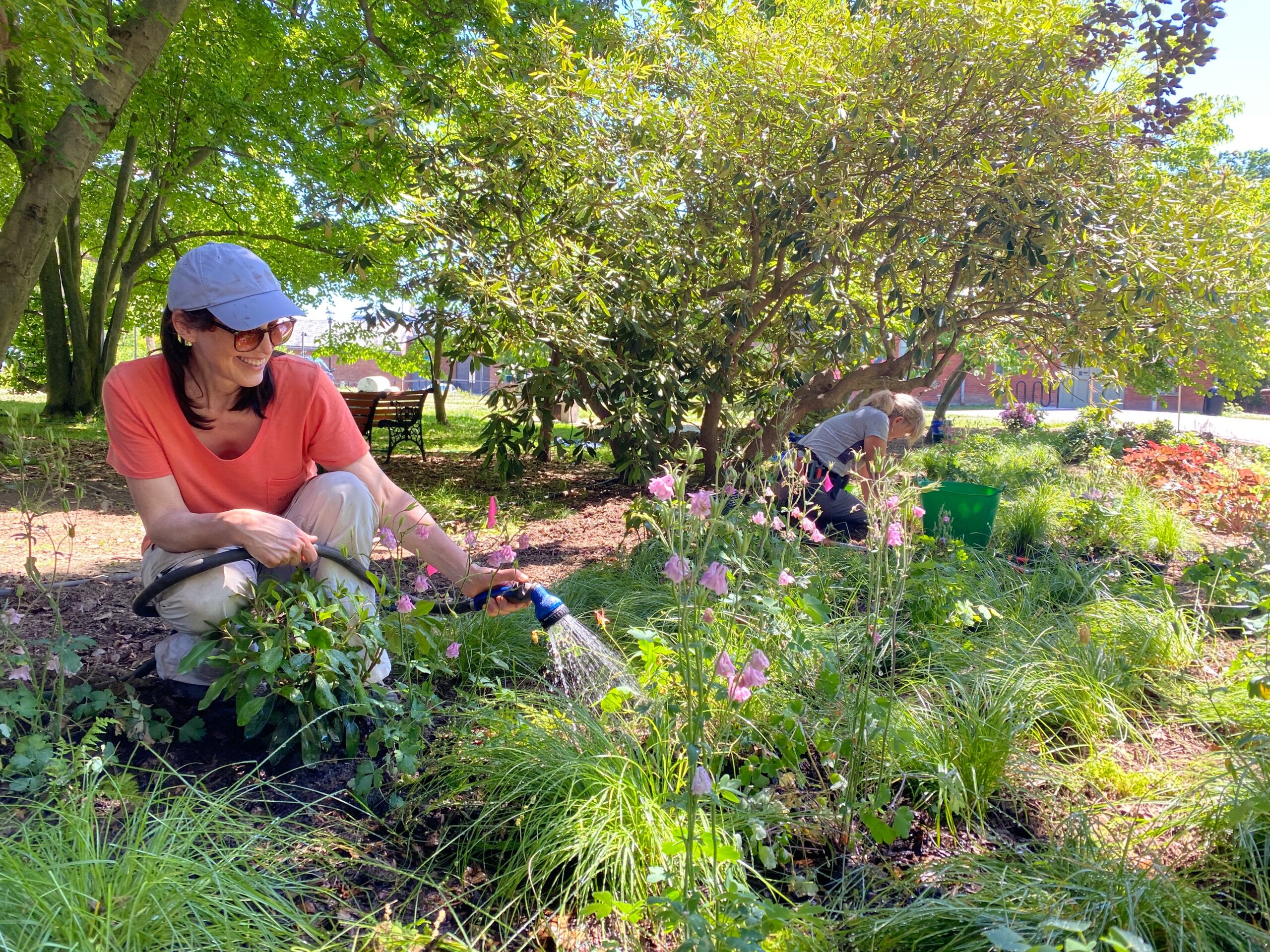
Created with significant volunteer support, including planting assistance from the Green Apprentices of KNOX Hartford, the garden was supported by a grant from an anonymous donor.
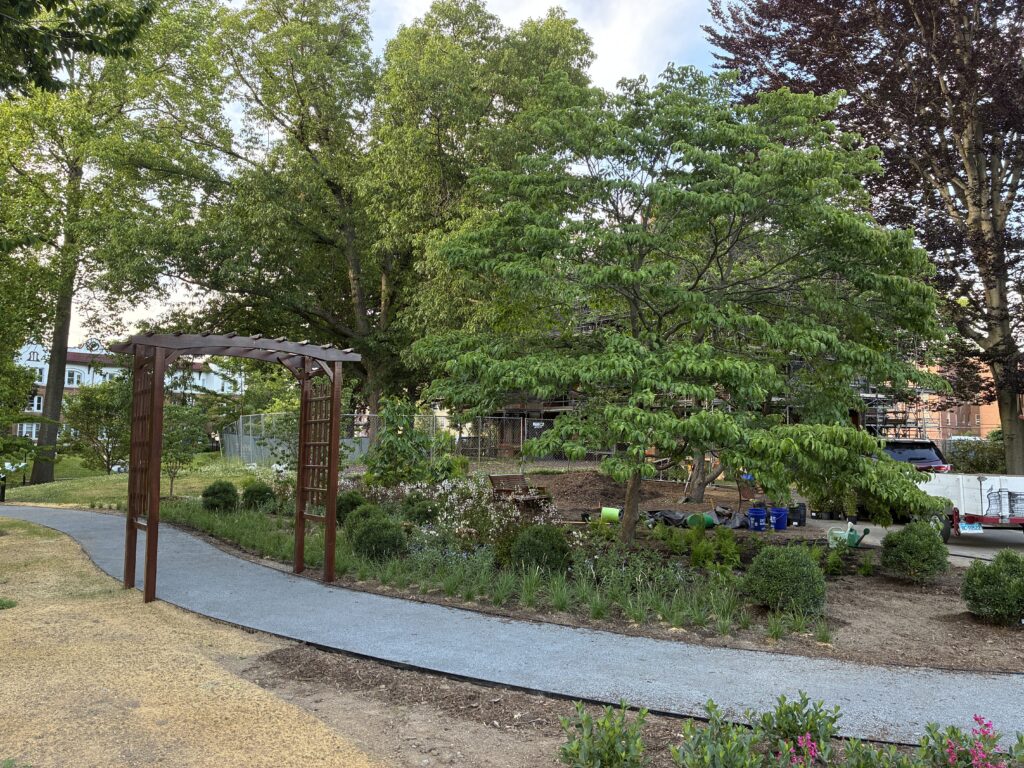
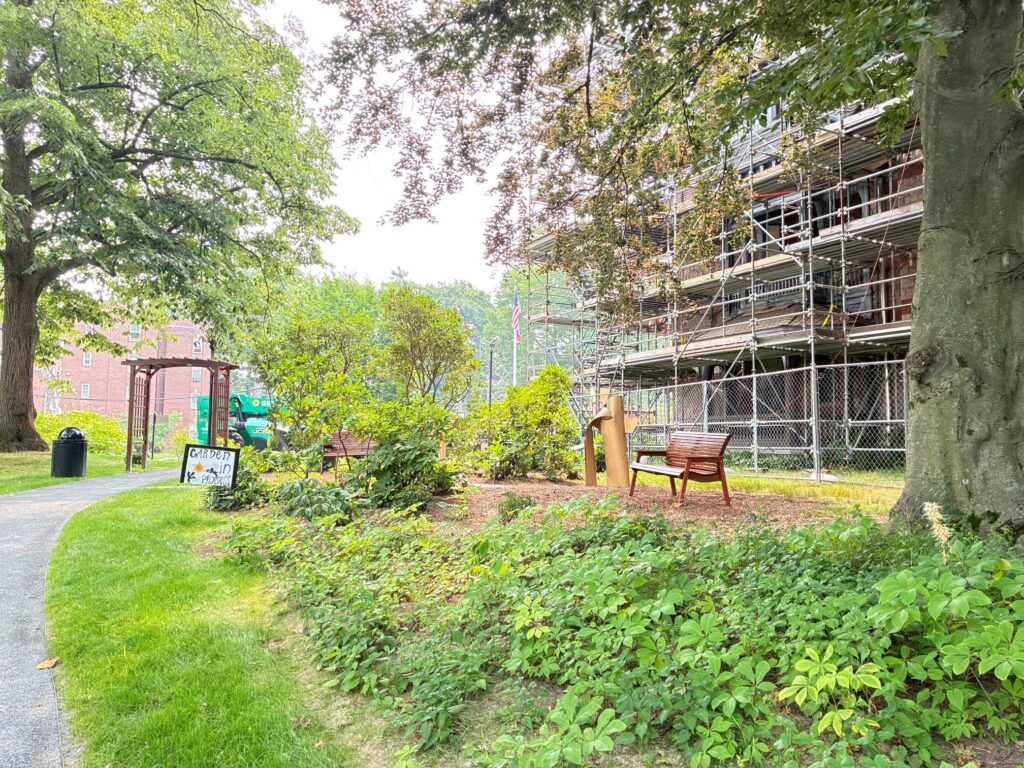
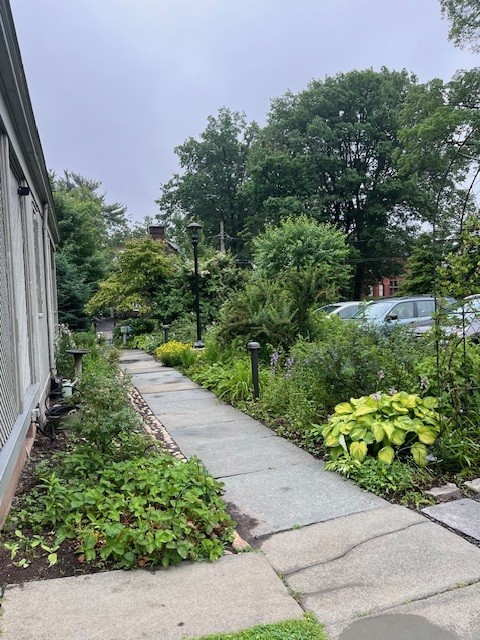
On the north side of the Day House, a meandering pathway leads through another new shade garden.
Custom wooden arbors created by Hartford-based Fresh Start Works mark each end of the pathway. Built around an established stand of rhododendron and Ohio buckeye, the garden includes additional Ohio buckeye and mountain laurel along with spring bulbs, ferns, hosta, columbine, and Solomon’s seal.
The garden and its furnishings were supported by a Love Your Block grant, administered by the City of Hartford in collaboration with Hartford Gives.
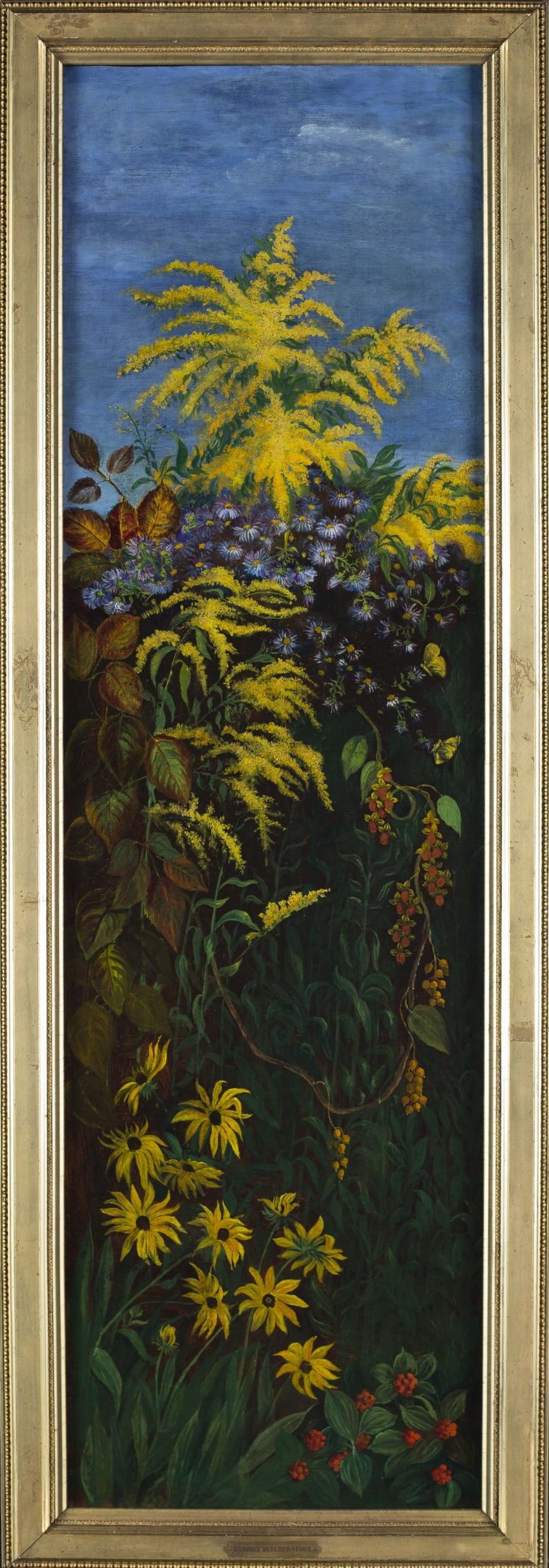
After settling into her Forest Street home, Harriet Beecher Stowe found time not only for writing, but for painting and visiting with neighbors. Sometimes, she combined these pursuits joining neighbor, Elisabeth “Lillie” Gillette Warner, for painting sessions. Lillie, hoping to earn extra income through her art, looked to Harriet for guidance.
In an 1874 letter to her husband, Lillie wrote admiringly of Harriet: “She paints like lightning—to use a figure. She has a new magnolia that is magnificent.” While Lillie later abandoned painting, Harriet continued, exhibiting her work locally. More than a dozen of her paintings are on view in the Stowe House.
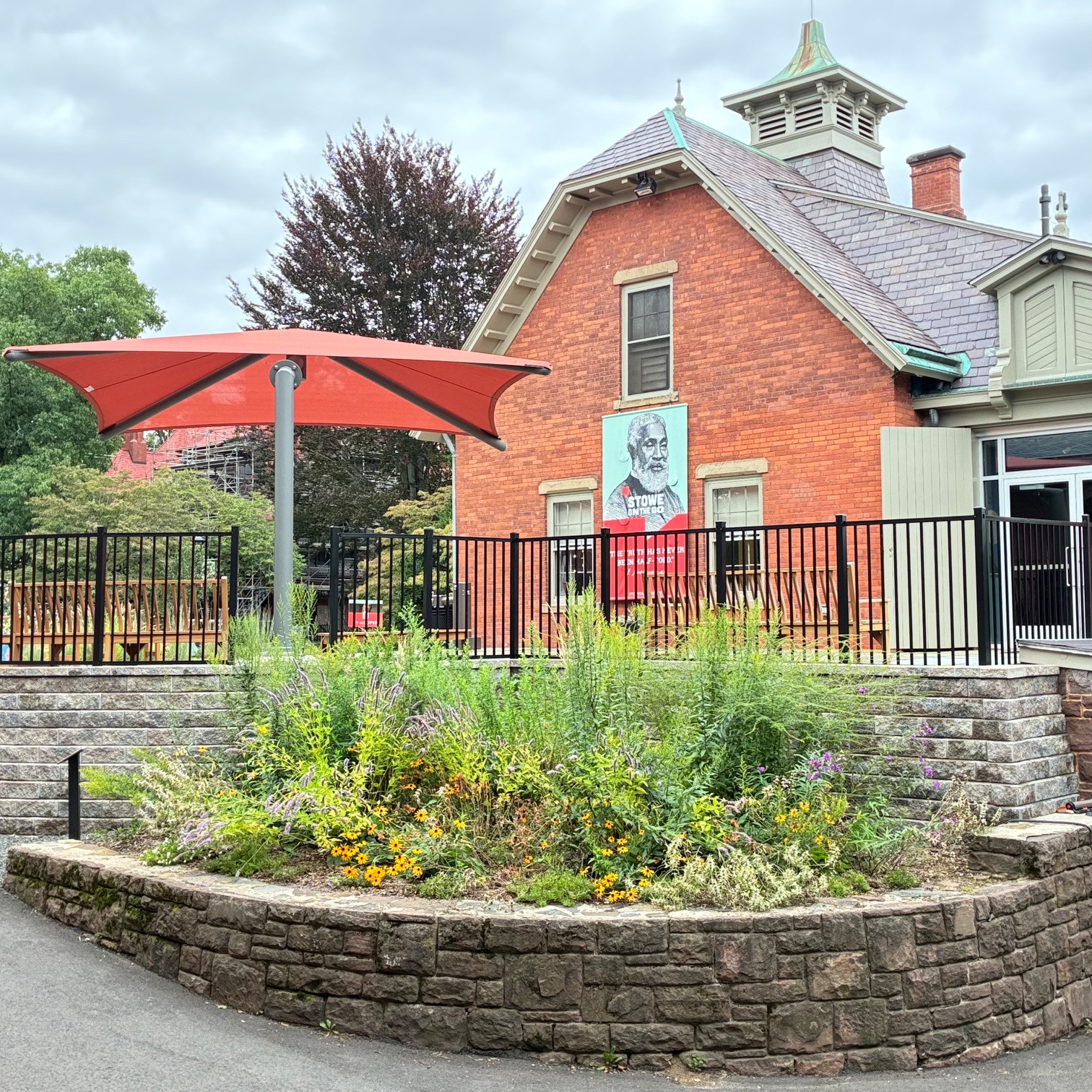
This garden is inspired by one of those paintings: Goldenrod, Winterberry, and Black-eyed Susans. Many of the fall-blooming plants are native to this region.
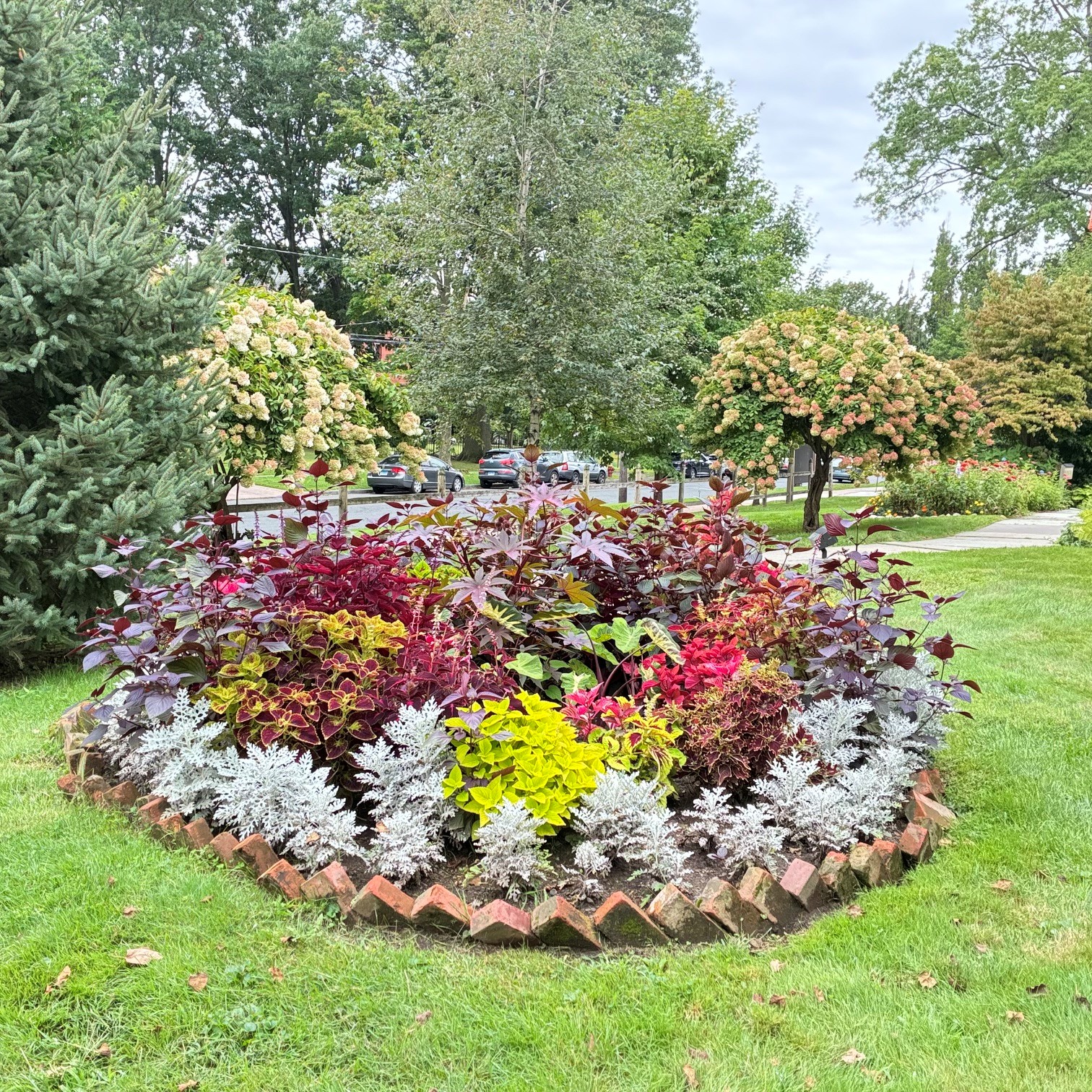
This oval, annual garden was first planted at the Stowe Center in 1987 and was initially designed by Rob Fuoco, who oversaw the gardens at Stowe for many years.
Prior to the Victorian era gardens were primarily practical but in the 1800s homeowner’s curb appeal becomes more important and it was felt that lawns should contain collections of shrubs, clusters of trees, lots of shaped flowerbeds. Empty spaces implied a lack of effort, a lack of caring, and even unhappiness. Many High Victorian gardens contained lots of different textures, smells, shapes, colors, and the weirder the better.
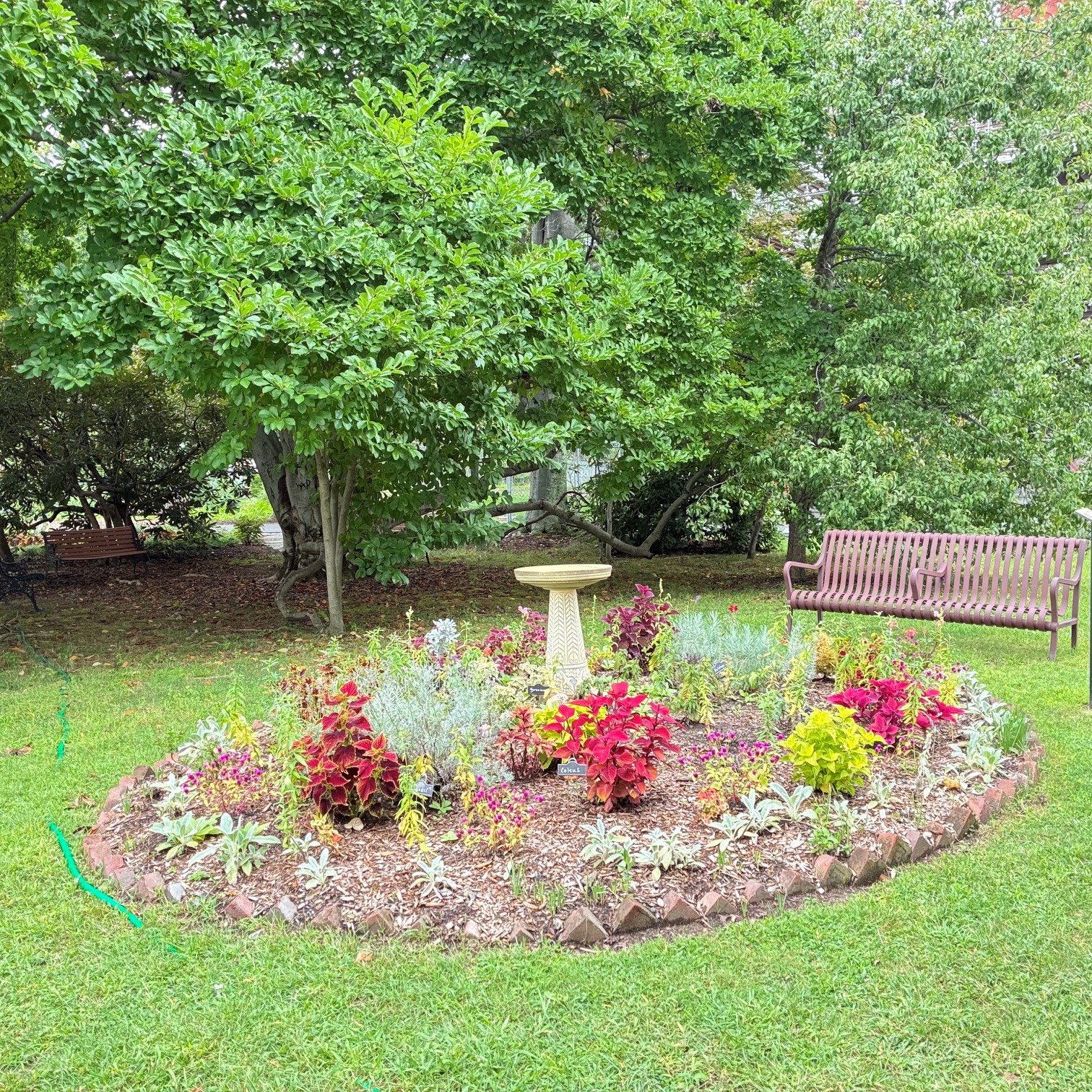
At the center of this garden grows the tallest plant, caster bean, an annual with large star shaped red-bronze leaves and seed pods. This central plant is surrounded by grand elephant ears, followed by a variety of colorful coleus. Japanese purple shiso, and silver dusty miller.
This round Victorian style garden sits on the west side of the Stowe House and today is flanked by two benches. In the spring, it comes alive with colorful tulips, daffodils, and grape hyacinth and is later planted with varieties of bold colors, textures, and smells an often includes fragrant lavender, old-fashion varieties of geraniums, vibrant coleus, globe-shaped gomphrena, and heliotrope and nicotiana known for their sweet evening fragrance. At the center of this garden sits a bird bath that is visited regularly by robins and sparrows.
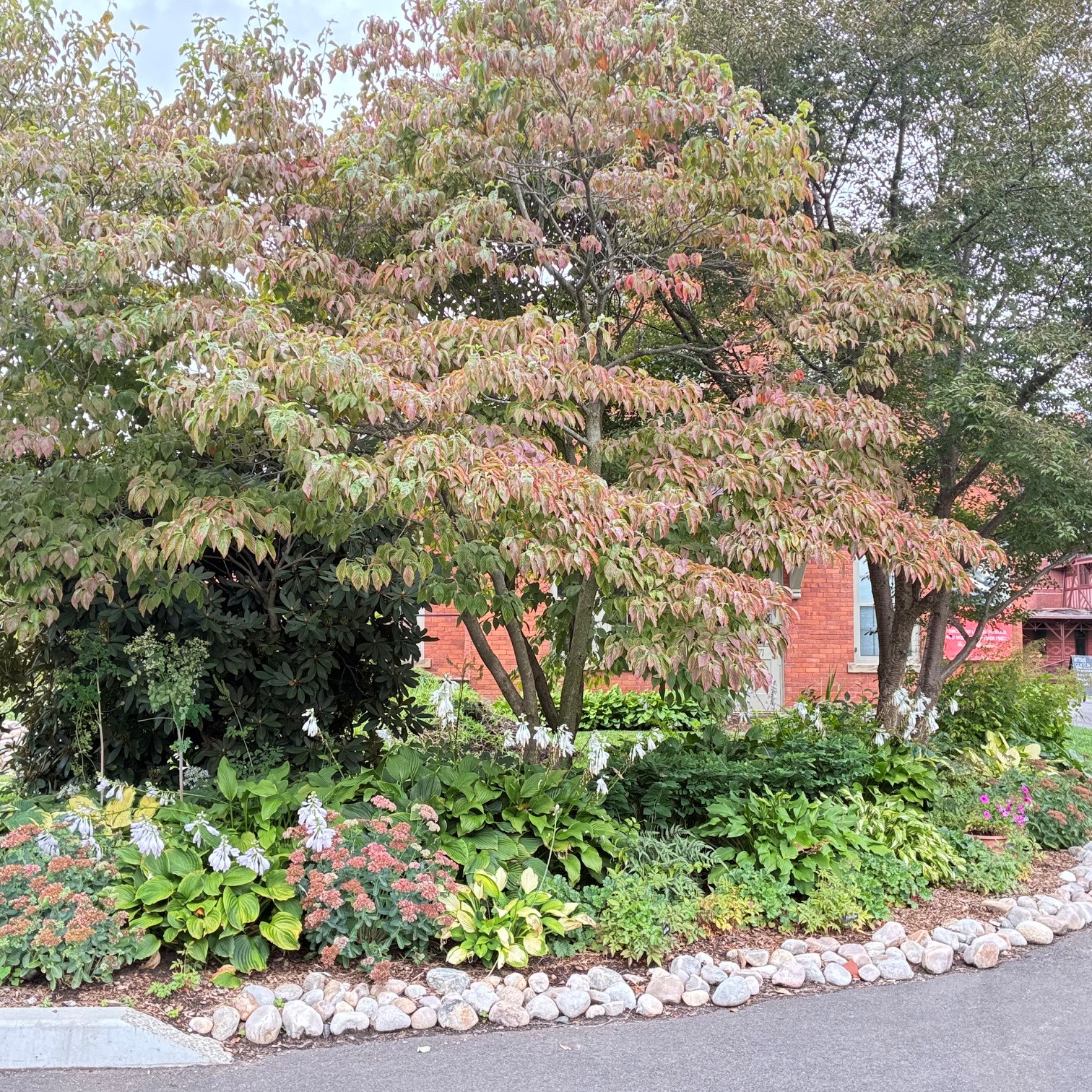
The garden sits between the parking lot and the Visitor Center and features shade-loving plants and flowering dogwood and cherry trees. This informal garden has been planted with a variety of ferns, meadow-rue, hosta, coral bell, Solomon’s seal, astilbe, and goatsbeard. In contrast with Stowe’s Cottage Garden, this garden is designed to be more naturalistic and lacks the bold and colorful varieties found elsewhere around campus.
Harriet Beecher Stowe lived here with her husband and twin daughters from 1873 until her death in 1896. Though best known for her writing, Stowe was also a painter and passionate gardener.
The Victorian cottage-style gardens surrounding her home today feature many of the plants she loved and wrote about in her books and letters. The design is also
inspired by period photographs and her own artwork. Beds are planted informally, with a vibrant mix of ornamental and edible plants, shrubs, and flowering trees in a variety of colors. Among Stowe’s favorites were sweet peas, peonies, foxglove, bee balm, nasturtiums, daylilies, marigolds, petunias, asters, and goldenrod. In all her garden designs, Stowe strived for mass plantings in bright colors.
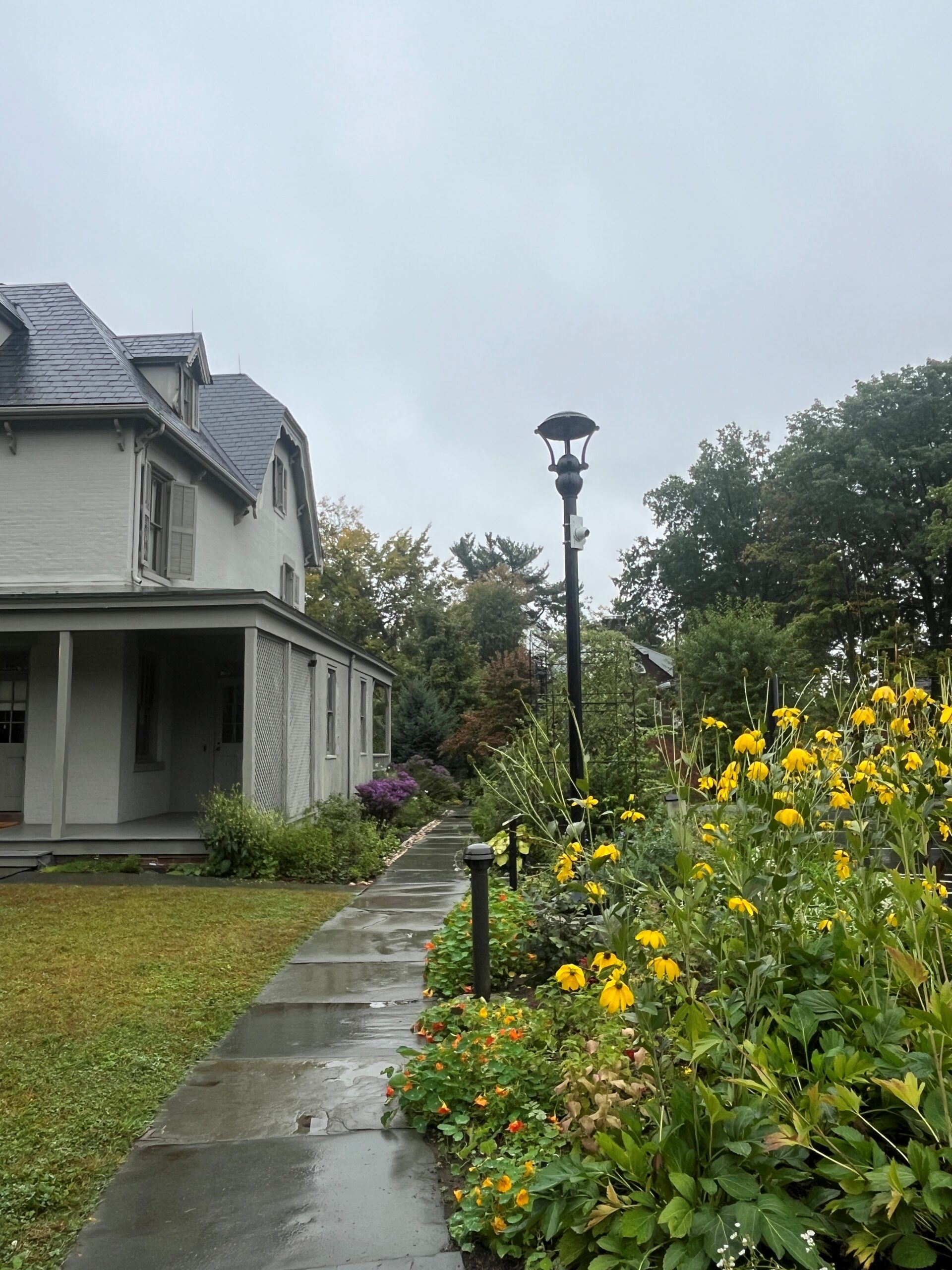
Katharine Seymour Day, like her great-aunt Harriet Beecher Stowe, was an avid gardener and a talented artist. She was also a passionate preservationist. She purchased the Stowe House in 1924 and this house in 1941.
As a member of the Hartford City Planning Commission, Day worked to protect this notable literary neighborhood. She ultimately founded and invested in the organization that preserves and maintains the Stowe Center today. The main garden, on the site of a former greenhouse, is bordered on two sides by a wooden trellis supporting various climbing roses. Two semi-circular pathways allow for closer viewing of the plantings and a central ornament. The garden begins with spring bulbs, followed by a succession of seasonal blooms, including peonies, irises, boltonia, phlox, loosestrife, and Queen of the Prairie. Additional gardens encircle the house, inspired by period photographs and flowers featured in Day’s own paintings.
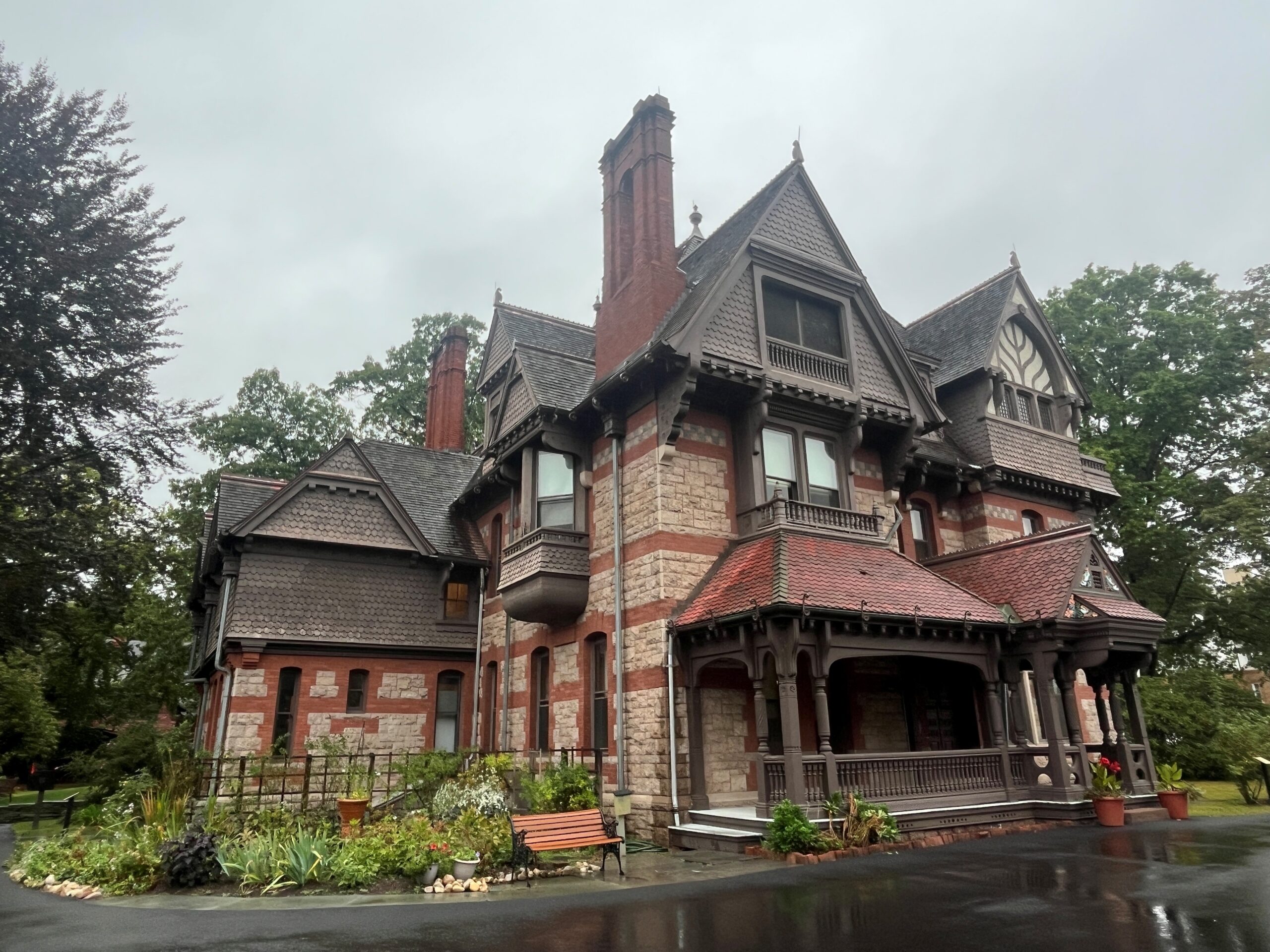
Many of the new plants in Harriet’s Backyard are native to New England, adding seasonal color and texture to the landscape.
Trees
Star Magnolia · Dogwood · Cornelian Cherry · Ohio Buckeye
Shrubs
Mountain Laurel · Inkberry · Chokeberry · Rhododendron · Hydrangea
Woodland & Perennial Plants
Ferns · Wild Geranium · Columbine · Solomon’s Seal · Foam Flower · Coral Bells · Amsonia · Penstemon
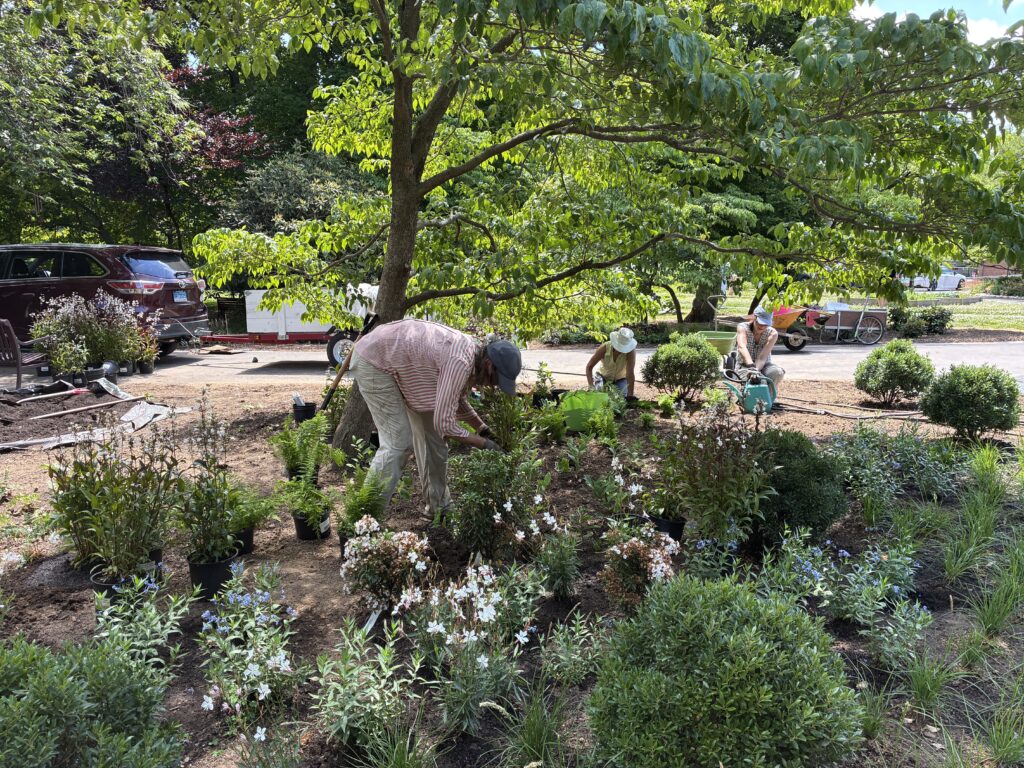
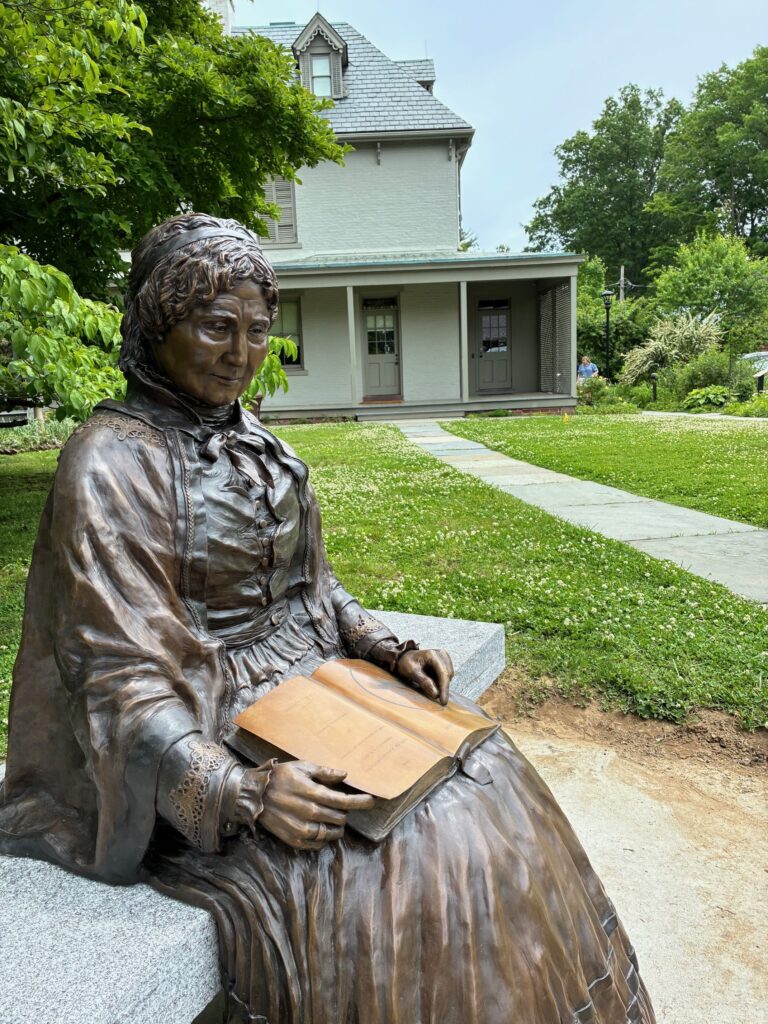 Two works of sculpture have found a home within the gardens.
Harriet Beecher Stowe
Near the Stowe House, a life-size bronze sculpture by artist Brenda Councill depicts Harriet Beecher Stowe seated on a bench reading the 1848 freedom narrative of Josiah Henson.
The sculpture was made possible through a generous gift from Rosamond Warren Allen.
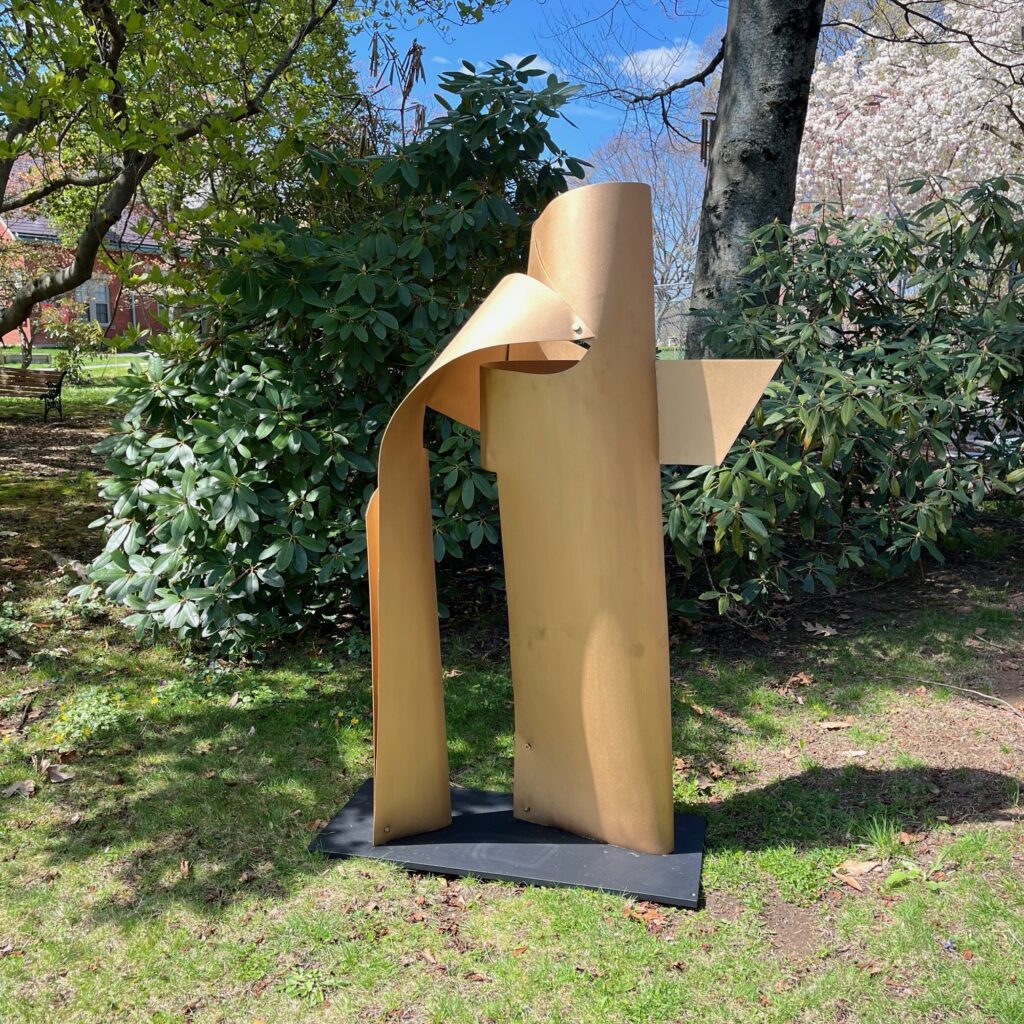
Carol Kreeger Davidson
The Day House garden features an abstract sculpture by Connecticut artist Carol Kreeger Davidson (1929–2014).
The work was given to the Stowe Center by the Marks family in memory of Leta Weiss Marks (1932–2025).