The Stowe Center is dedicated to equitable, deep, broad, and creative thinking fueled by information gathering and mental volition. We encourage our staff and our guests to work hard to gain information and consider with care and empathy conflicting, diverging, and converging points of view. Mental effort means asking questions, listening with attention and curiosity, and truly considering other people’s thoughts. We value active engagement in ideas, open mindedness, and persistent belief in and advocacy of principles that recognize and celebrate shared humanity.
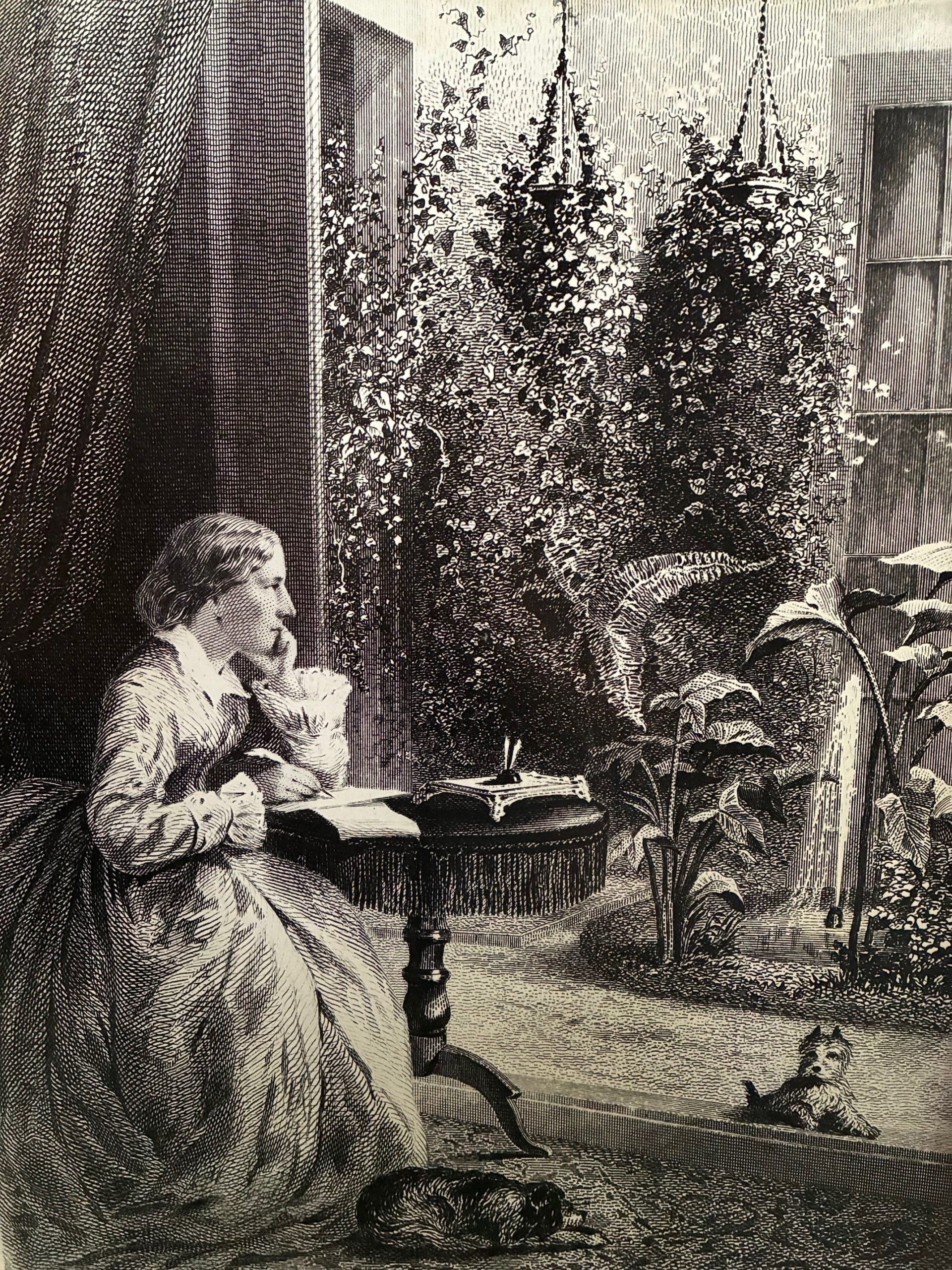
At the Stowe Center, engagement with diverse ideas and information often looks like conversation—which sometimes sounds like debate and ardent advocacy, and occasionally sounds like argument, hopefully never like cancellation. On paper, it looks very similar to the process Harriet Beecher Stowe utilized to write her internationally best-selling anti-slavery novel Uncle Tom’s Cabin.
In order to write about a thing she did not know first-hand, Stowe had to read, talk with others who had first-hand knowledge, converse with those who had a variety of points of view, and use her imagination as well as her intelligence and strategic skills as a writer to share her persuasive conclusions with a broad audience. In short, she used mental volition to grapple a long time before she took action.
When others doubted her authority, she produced A Key to Uncle Tom’s Cabin, as an index of sources—first-person, primary, lived experiences. In A Key, she gave credit to those whose ideas she utilized.
Artificial Intelligence is in the news constantly today. Arguably, AI is in every aspect of our day—ranging from the visibility of smart typing to invisible background monitoring (yikes). Many of us type questions into search engines and/or AI helpers.
If she were alive today, Stowe might have typed into an AI helper, too. But I wonder if she would have. Stowe—and her family—highly valued mental marathons, to use a term from David Brooks in his article “The People Who Will Thrive in the AI Age” (The Atlantic, June 28, 2026). Mental marathoners are people with a high need for cognition; in other words, they really need to know, to understand, to fully research, debate, and consider all aspects of an idea—they are not easily satisfied, they hunger for more. These are the problem solvers who relish the arduous journey and realize that failure is a part of the eventual understanding—and that, sometimes, there are only more questions and no final conclusions . . . yet.
Brooks specifies that the people who will thrive in an AI world are those who remember what makes being human unique and valuable: the capacity for love, the assertion and celebration of creativity, the striving to meet hunger and appreciate wonder, and above all the drive to preserve human dignity.
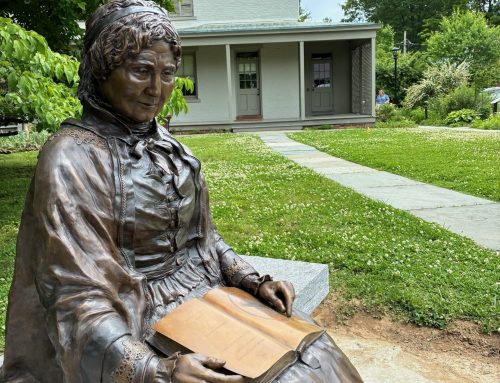
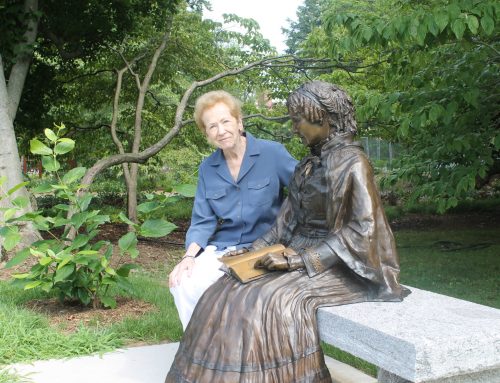
We recently dedicated a beautiful, full-size bronze statue of Stowe—a gift from her great great granddaughter Rosamond Warren Allen, and sculpted by Brenda Councill. Stowe is depicted in a powerful stance—she is reading, engaging her mind and her feelings with the mind and feelings of another person.
At the Stowe Center we facilitate engagement among and between people in every aspect of our work—dialogic tours, conversation-based programs, interactive exhibits, and reading groups.
Our vision at the Stowe Center is a world in which engagement leads to empathy, empowerment, and change for good. May that be so—person to person.